
Wally Hase
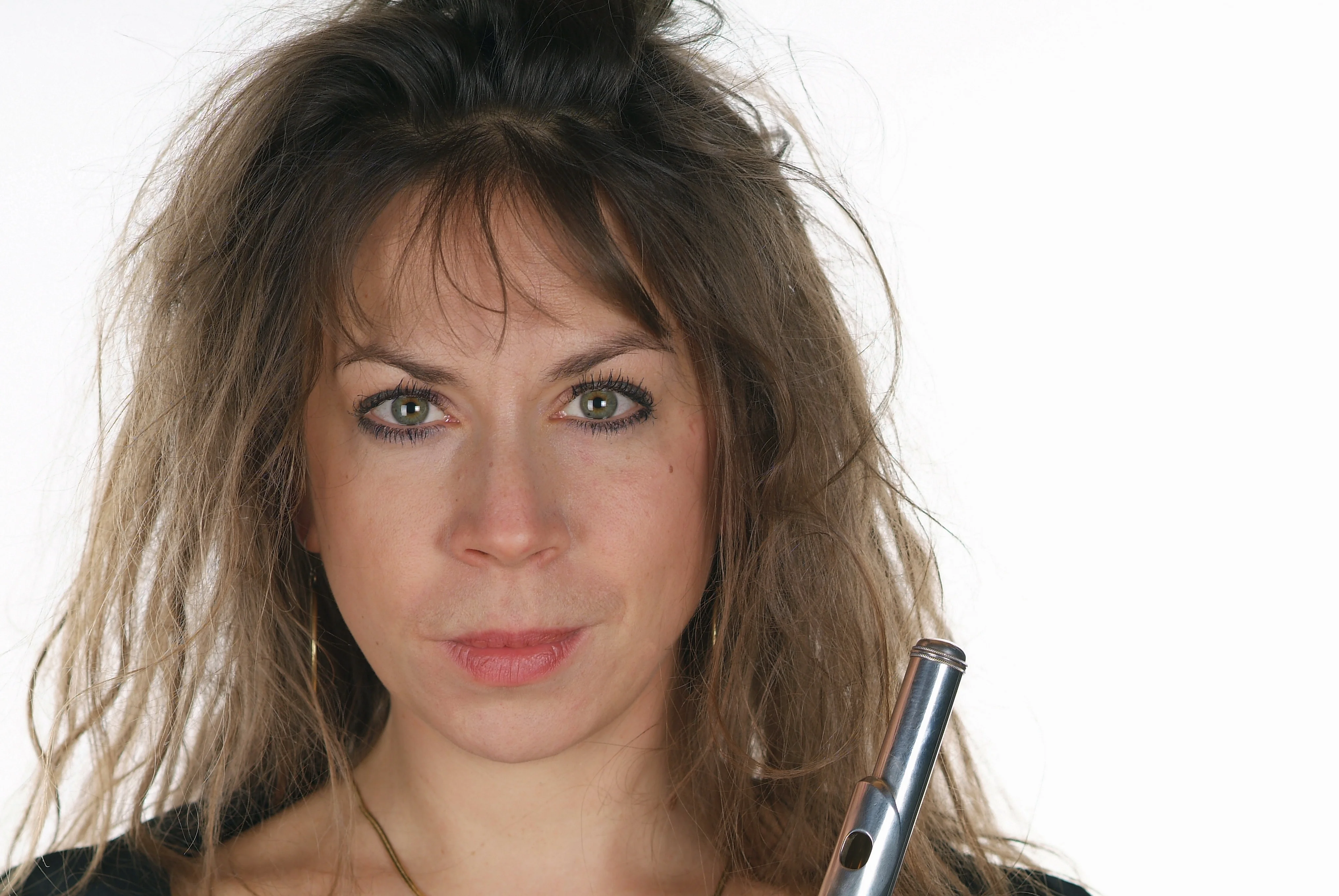
Image from Wikipedia
Image from Wikipedia
Wally Hase – The Art of the Flute between Chamber Music, Solo Career, and International Master Classes
A German flutist with sonic authority and exceptional stage presence
Wally Hase, born in 1969 in Freiburg im Breisgau, is among the defining German flutists of her generation. Her artistic profile combines a highly developed solo culture with intense chamber music, extensive pedagogical work, and remarkable international presence. From an early age, she carved out a music career that cannot be reduced to a single role, but rather unites virtuosity, repertoire awareness, and pedagogical authority within a clear artistic signature. ([de.wikipedia.org](https://de.wikipedia.org/wiki/Wally_Hase))
From Freiburg to the Major Music Centres of Europe
Wally Hase's training began in 1986 at the Hochschule für Musik in Stuttgart under Karl Friedrich Mess, after she had received a scholarship to the World Youth Orchestra in the USA that same year. She continued her studies with Jean-Claude Gérard and Aurèle Nicolet, two names synonymous with a demanding, stylistically reflective flute school. Even during her training, she gained orchestral experience in the Ludwigsburg Festival Orchestra and toured China, Japan, and South America, as well as performing in New Zealand in 1989 at the Festival of the Arts. These early stages showcase an artist whose career was internationally oriented from the start. ([de.wikipedia.org](https://de.wikipedia.org/wiki/Wally_Hase))
Between 1990 and 1993, Hase was a member of the Karlsruhe Ensemble 13 as well as the Bach Collegium Stuttgart under the direction of Helmuth Rilling. Even before graduating, she became the solo flutist of the Staatskapelle Weimar at the age of 22 and held this position until 2009. This early appointment marked a significant breakthrough: It not only established Hase within the professional orchestral framework but also made her visible as a soloist with a sustainable sound, great intonation accuracy, and stylistic confidence. ([de.wikipedia.org](https://de.wikipedia.org/wiki/Wally_Hase))
Soloist, Chamber Musician, Ensemble Artist
Wally Hase developed into a highly sought-after soloist alongside her orchestral work. She collaborated with the Camerata Salzburg, Staatskapelle Dresden, the radio symphony orchestras of SWR Freiburg-Baden-Baden, MDR Leipzig, and WDR Köln, as well as with the Cappella Andrea Barca under András Schiff. Concerts with the Dresden Philharmonic, the Folkwang Chamber Orchestra, and the Robert Schumann Philharmonie Chemnitz further highlight her versatility. This variety showcases a flutist who does not just shine in orchestras but understands the solo role as a narrative, colorful, and precisely structured form. ([de.wikipedia.org](https://de.wikipedia.org/wiki/Wally_Hase))
Her chamber music work is particularly characteristic. Hase performs in a duo with guitarist Thomas Müller-Pering, in the Trio Lobkowitz Wien, and with the Mandelring Quartet; moreover, the project “Music & Lyric” was created in collaboration with Jan Philipp Reemtsma. In chamber music, her musical profile becomes particularly evident: differentiated articulation, chamber music awareness, and a sense of sound balance characterize this collaboration. This makes her a musician who not only interprets but also precisely models musical spaces. ([de.wikipedia.org](https://de.wikipedia.org/wiki/Wally_Hase))
Awards, Recognition, and Artistic Authority
The professional reputation of Wally Hase is reflected in awards and institutions. In 2006, she received the German Record Critics' Award, followed by the Leopold in 2007. Such recognitions are more than mere honorary titles: they affirm an artistic quality that convinces in the tension between fidelity to the repertoire, interpretative independence, and stylistic precision. Hase operates in that rare area of classical instrumental art, where pedagogical authority and public recognition mutually enhance one another. ([de.wikipedia.org](https://de.wikipedia.org/wiki/Wally_Hase))
Discography: A Repertoire Between Classical, Modern, and Chamber Music
The selected discography of Wally Hase documents a wide stylistic spectrum. Her solo recordings include Weimarer Klassik 2, Tritonus Wimares, Festliche Weihnachtskonzerte, and Konzert im Weimarer Schloss. In the chamber music realm, highlights include Lyric pieces with Thomas Müller-Pering, Romances, the audiobook Jorinde und Joringel, Círculo Mágico, and Du, ich und zuweilen Liebe. These recordings display an interpretative openness that ranges from classical repertoire and Romantic works to Latin American sound worlds. ([de.wikipedia.org](https://de.wikipedia.org/wiki/Wally_Hase))
Particularly, Círculo Mágico emphasizes her affinity for colorful, rhythmically dynamic repertoire with works by Piazzolla, Ravel, Machado, Cordero, and Assad. The Animato catalog also highlights her collaboration with Thomas Müller-Pering and showcases the stylistic range of this recording. Thus, Wally Hase does not appear merely as a repertoire specialist but as a musician who views the flute as a flexible instrument capable of transitioning between lyrical elegance and rhythmic energy. ([static.klassik.com](https://static.klassik.com/labels/kataloge/348_katalog.pdf))
Musical Development and Interpretative Profile
Wally Hase's artistic development is characterized by a clear connection between historically informed repertoire understanding and contemporary openness. Her studies with Mess, Gérard, and Nicolet laid the foundation for a playing style that combines technical sovereignty with sonic nobility. As a solo flutist and chamber musician, she navigates a tension between classical clarity, solo assertiveness, and sensitive ensemble culture. This balance makes her interpretations easily recognizable. ([de.wikipedia.org](https://de.wikipedia.org/wiki/Wally_Hase))
The combination of concert activities, radio recordings, CD productions, and jury work points to an artist of institutional relevance. Hase gives master classes in Europe, Australia, Asia, and South America and serves internationally as a juror. This global presence enhances her authority far beyond the concert hall: she acts as an ambassador of a flute school that emphasizes accuracy, sound culture, and musical intelligence. ([de.wikipedia.org](https://de.wikipedia.org/wiki/Wally_Hase))
Teaching, Youth Promotion, and International Impact
In 2000, Wally Hase was appointed as a professor of flute at the Hochschule für Musik Franz Liszt Weimar; from 2014 to 2018, she also held a guest professorship at the University of Music in Krakow. Since October 2018, she has been a university professor of flute at the University of Music and Performing Arts Vienna. This academic career illustrates how closely her artistic practice is linked to music pedagogical responsibility. She is one of those musician personalities who not only interpret but also shape educational standards. ([de.wikipedia.org](https://de.wikipedia.org/wiki/Wally_Hase))
Her work at the university is not a sideline for Hase, but part of the bigger picture. Her experience as an orchestral musician, soloist, and chamber musician flows directly into her teaching. This results in a profile that is particularly valuable in classical music: an artist who does not teach young flutists abstractly but shapes them through the practice of a long and successful concert life. ([de.wikipedia.org](https://de.wikipedia.org/wiki/Wally_Hase))
Current Activity and the Presence of a Vibrant Career
Wally Hase remains active to this day. On her official website, she points to new recordings on her YouTube channel, including Maurice Duruflé’s Prélude, Récitatif et Variations with the Trio Lobkowitz Wien as well as Carl Frühling’s Fantasie op. 55. Furthermore, there are additional current concert dates and projects mentioned, including performances with the Camerata Salzburg. This demonstrates an artist whose music career continues to be marked by activity, repertoire maintenance, and public visibility. ([wallyhase.de](https://www.wallyhase.de/))
Cultural Influence and Relevance to the Classical Music Scene
Wally Hase represents a flute artistry that transcends mere virtuosity. Her influence is grounded in versatility, stylistic breadth, and a consistent connection between concert, recording, and teaching. As a solo flutist, professor, and chamber musician, she contributes to maintaining the flute as a demanding, colorful, and highly virtuosic instrument within the German-speaking music scene. It is precisely this combination of stage presence and pedagogical depth that makes her sustainably relevant to the classical music scene. ([de.wikipedia.org](https://de.wikipedia.org/wiki/Wally_Hase))
Her career also tells a story of European music practice: from German and Austrian institutions through international tours to projects with literary references and genre-defying repertoire expansions. In this sense, Wally Hase represents a modern yet tradition-aware artist biography based on competence, continuity, and sonic integrity. Those seeking to experience the flute as a grand concert art will find an impressive reference in her work. ([de.wikipedia.org](https://de.wikipedia.org/wiki/Wally_Hase))
Conclusion: Why Wally Hase Remains Exciting
Wally Hase is an artist whose strength lies in the combination of technical mastery, chamber music intelligence, and pedagogical authority. Her career spans from early orchestral practice to award-winning recordings and an international professorship. This very mix makes her a flutist of lasting relevance. Those who experience her art live encounter not only an excellent sound but also a deeply evolved musical personality with depth and charisma. ([de.wikipedia.org](https://de.wikipedia.org/wiki/Wally_Hase))
Official Channels of Wally Hase:
- Instagram: no official profile found
- Facebook: no official profile found
- YouTube: https://www.youtube.com/channel/UCdtWjMGbiEsgUr-NkwXPQMg
- Spotify: no official profile found
- TikTok: no official profile found