
Randy Brecker
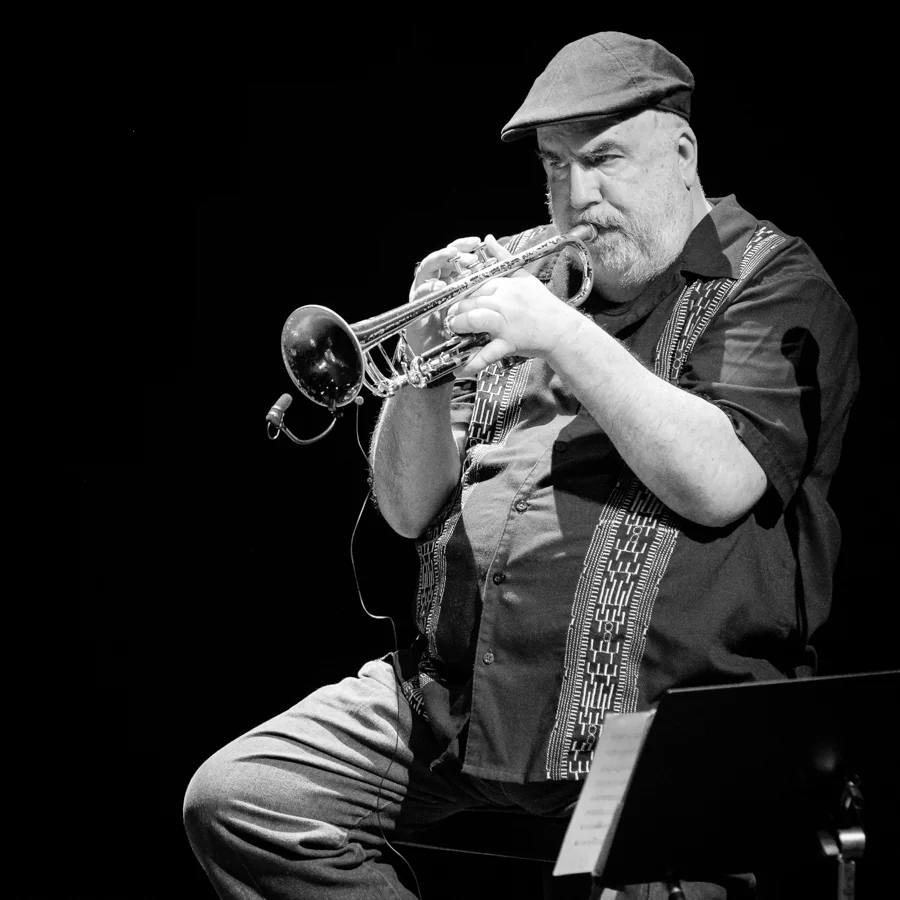
Image from Wikipedia
Image from Wikipedia
Randy Brecker – The Trumpet Sound Between Jazz, Fusion, Rock, and R&B
A Life for the Great American Music History
Randy Brecker is one of those musicians whose name has long stood for a whole aesthetic: confident trumpet, lyrical flugelhorn, stylistic openness, and a music career that seamlessly connects jazz, rock, and R&B. Born Randal Edward Brecker in 1945 in Philadelphia, he developed into one of the most influential brass players of his generation, playing on hundreds of recordings with artists from various genres throughout his career. His biography reads like a concentrated journey through several decades of American music history. ([randybrecker.com](https://www.randybrecker.com/bio))
From an early age, Brecker's musical talent was nurtured in an environment that made him receptive to virtuosity, arrangement, and stylistic curiosity. The official artist profile describes him as a musician whose achievements have shaped the sound world of jazz, R&B, and rock for more than six decades. This range is not merely a decorative aside, but the core of his artistic identity: Brecker thinks in formations, songs, and sounds, not in narrow genre boundaries. ([randybrecker.com](https://www.randybrecker.com/bio))
From Philadelphia to New York: Education and Early Precision
Brecker studied from 1963 to 1966 at Indiana University with Bill Adam, David Baker, and Jerry Coker, three names synonymous with analytical depth, methodical training, and jazz pedagogical authority. After moving to New York, he worked with Clark Terry, the Duke Pearson Big Band, and the Thad Jones/Mel Lewis Jazz Orchestra, ensembles which demanded the highest standards in timing, intonation, and phrasing. This phase shaped his approach to the trumpet: technically controlled, harmonically aware, and rhythmically pointed. ([randybrecker.com](https://www.randybrecker.com/bio))
In New York, it quickly became apparent why Brecker later impressed as both a sought-after session musician and bandleader. He managed to assert himself in big band contexts without losing his own sound, and at the same time had enough openness to not just witness the electric, often experimental developments of the early 1970s, but to actively shape them. This balance of discipline and risk continues to make his style exciting to this day. ([randybrecker.com](https://www.randybrecker.com/bio))
Blood, Sweat & Tears, Horace Silver, and the Birth of Fusion Thinking
In 1967, Brecker joined Blood, Sweat & Tears, positioning himself squarely in the tension between rock aesthetics, horn arrangements, and jazz harmony that redefined pop culture in those years. He then transitioned to Horace Silver and later played with Art Blakey’s Jazz Messengers – experiences that solidified his foundation in acoustic jazz before he fully embraced electrified formats. Brecker's first solo album Score was released in 1968 and already showcased his brother Michael as a young tenor saxophonist. ([randybrecker.com](https://www.randybrecker.com/bio))
With the group Dreams, which he founded alongside Michael Brecker, Barry Rogers, Billy Cobham, and John Abercrombie, Brecker firmly entered the world of fusion. The band released two notable albums that are today regarded as early, daring fusion documents. The fact that this music is viewed retrospectively as collectible and style-defining illustrates how early Brecker articulated the grammar of modern, groove-oriented jazz. ([randybrecker.com](https://www.randybrecker.com/bio))
The Brecker Brothers: Composition, Groove, and Musical Authority
In 1975, Randy and Michael Brecker founded the Brecker Brothers Band, one of the most influential fusion formations of the 1970s and early 1980s. According to the official biography, they released six albums on Arista and received seven Grammy nominations between 1975 and 1981. Even the first album bore a strong signature of Randy Brecker: he wrote, arranged, and produced the debut and featured the track “Some Skunk Funk,” which remains a key piece for energetic jazz fusion to this day. ([randybrecker.com](https://www.randybrecker.com/bio))
The Brecker Brothers represented a music that fused precision, funk, and complex harmonies. It was precisely the combination of high instrumental competence and catchy, physical groove that made the project so effective. In retrospect, this band appears as a bridge between the jazz club, radio suitability, and studio aesthetics – a format that continually fascinated both musicians and listeners. ([randybrecker.com](https://www.randybrecker.com/bio))
Solo Career and Grammy Successes
After parting ways with his brother, Brecker developed an independent solo career that should not be seen as a diversion, but rather as a new condensation of his ideas. Into the Sun, released in 1997, encapsulated his impressions of Brazil in a colorful, melodically open sound language and earned him his first Grammy as a solo artist. This was followed by Hangin’ in the City and 34th n’ Lex, the latter winning the Grammy for Best Contemporary Jazz Album in 2003. ([randybrecker.com](https://www.randybrecker.com/bio))
The official website lists a total of seven Grammy awards while emphasizing Brecker's role as a composer, performer, and clinician. This is more than a statistic of prestige: it describes a musician whose significance is not solely based on a famous duo or a legendary band, but on a consistently productive creative output over decades. This combination of artistic authority and institutional recognition is particularly remarkable in the American jazz landscape. ([randybrecker.com](https://www.randybrecker.com/))
Late Mastery: Brazil, Big Band, and Orchestral Scope
Brecker's later works show a delicate expansion of his sound thinking. Randy in Brazil, from 2008, explicitly returned to Brazilian music, while The Jazz Ballad Song Book, created with the Danish Radio Big Band and the Danish National Chamber Orchestra in 2011, received four Grammy nominations. Such projects demonstrate that Brecker excels not only as a soloist but also as a creator of large-scale arrangements in which brass, harmony, and orchestral texture intertwine closely. ([randybrecker.com](https://www.randybrecker.com/bio))
In addition, there are collaborative works like Jazz Suite Tykocin and later projects such as RandyPOP! or Double Dealin’ with Eric Marienthal. The official biography also mentions The Hidden World Of Piloo as a recent release presented in January 2024. Brecker's discography thus remains vibrant and current, without denying its historical roots. ([randybrecker.com](https://www.randybrecker.com/bio))
Stylistics: The Tone, the Phrase, the Improvisation
Journalistically, Brecker's style can be described as a blend of hard-bop-influenced clarity and fusion-like elasticity. AllMusic highlights his "bold tone" and hard-bop-informed improvisational chops, referring to his ability to model lines with brilliance, attack, and harmonic comprehension. His melodic approach is also emphasized on the official website: Brecker's playing never feels merely virtuosic, but always narrative and structured. ([allmusic.com](https://www.allmusic.com/artist/randy-brecker-mn0000332725?utm_source=openai))
This quality is reflected in the recurring praise from the press for his energetic yet controlled stage presence. Reviews highlight his "crisp, clean trumpet sound" and melodic precision, as well as his ability to shape complex rhythmic patterns with ease. Especially in jazz fusion, where technical brilliance can quickly become mere demonstration, Brecker always maintains musical sense and dramatic tension. ([randybrecker.com](https://www.randybrecker.com/))
Cultural Influence and Collaboration with Big Names
Brecker's cultural footprint extends far beyond jazz. The official biography mentions artists such as James Taylor, Bruce Springsteen, Parliament/Funkadelic, Frank Sinatra, Steely Dan, Jaco Pastorius, and Frank Zappa as musicians with whom he has collaborated. This list illustrates how deeply Brecker's trumpet is embedded in the sonic memory of pop and rock history. ([randybrecker.com](https://www.randybrecker.com/bio))
Notably, he is credited with the trumpet solo on Bruce Springsteen's "Meeting Across the River." Such moments highlight Brecker's role as a studio architect: he was not just a band member or soloist, but a musician whose sonority shapes songs and co-defines their emotional architecture. Thus, he belongs to a group of brass players who have elevated the term "session musician" to an artistic level. ([jazztimes.com](https://www.jazztimes.com/audio-video/video-archive/randy-brecker-reuniting-the-brecker-brothers-band/?utm_source=openai))
Current Projects, Concerts, and Continued Presence
Even in the later stages of his career, Brecker remains active. The official website announced that he will perform at The Jazz Cruise in 2026, an event described as a constellation of leading jazz stars. Additionally, the biography mentions new releases and ongoing activities in recent times, including projects with NDR Big Band, Ada Rovatti, and other prominent collaborators. This speaks to an artistic presence that is actively developed rather than nostalgically managed. ([randybrecker.com](https://www.randybrecker.com/news))
The official website also lists numerous recent releases and collaborations up to 2024, including work with Ada Rovatti on The Hidden World Of Piloo. Combined with the concerts and the continued cultivation of his discography, this creates the picture of a musician who remains unmistakably in flow despite his long career. Brecker exemplifies a jazz biography in which experience does not lead to stagnation, but to a deepening of expression. ([randybrecker.com](https://www.randybrecker.com/bio))
Conclusion: Why Randy Brecker Continues to Electrify Today
Randy Brecker is exciting because he masters multiple roles simultaneously: soloist, arranger, band visionary, studio professional, and cultural mediator between jazz, rock, and R&B. His career combines historical depth with stylistic vigilance, his sound is recognizable, and his discography narrates a story of continuous renewal. Those who want to understand how American jazz has opened up towards fusion, groove, and orchestral breadth will find in Randy Brecker one of the most credible protagonists. ([randybrecker.com](https://www.randybrecker.com/bio))
Especially live, this music unfolds its full impact: precise, hot, elegant, and full of experience. Randy Brecker remains an artist one should not merely listen to but experience – due to his stage presence, his form-conscious improvisation, and that rare connection of soul, technique, and historical authority. ([randybrecker.com](https://www.randybrecker.com/))
Official Channels of Randy Brecker:
- Instagram: No official profile found
- Facebook: No official profile found
- YouTube: No official profile found
- Spotify: No official profile found
- TikTok: No official profile found