
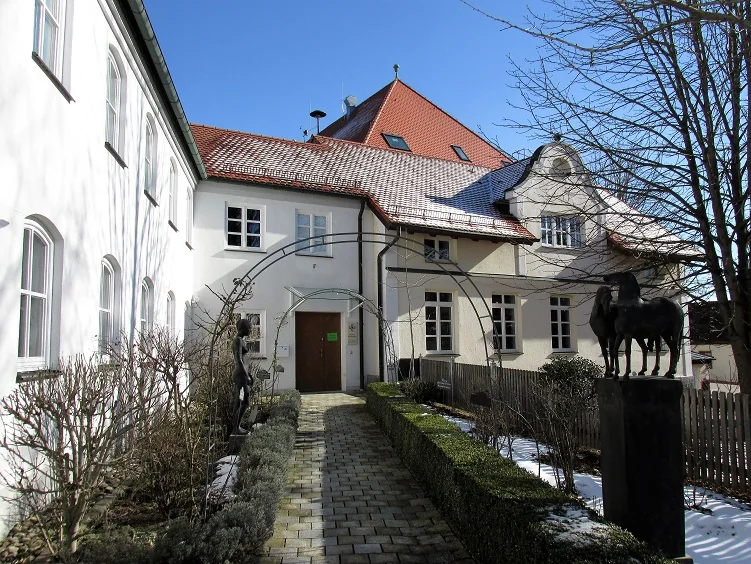
St.Birgittenhof 6, Altomünster
St.Birgittenhof 6, 85250 Altomünster, Germany
Museum Altomünster | Opening Hours & Exhibitions 2026
Between the monastery church, market fountain, and historic town center lies a special cultural site at St. Birgittenhof 6: the Museum Altomünster. As Germany's only Birgittine museum, it is dedicated to Saint Bridget of Sweden, the Birgittine order she founded, and the history of the Altomünster monastery. In two lovingly restored buildings directly at the monastery hill, surprisingly diverse insights into spirituality, art, and everyday history unfold in a compact space – from the medieval foundation of the monastery to the present day. Those who plan their time consciously will find a quiet window into the past here: with reliable opening hours on weekends, a very fair admission fee, and optional guided tours. The visit is complemented by audio guides with ten stations that succinctly explain core themes and exhibits. In 2026, new special exhibitions will also attract visitors, expanding the permanent exhibition with current perspectives. Thanks to the proximity to the Gaudnek Museum and walking paths around the monastery hill, a varied cultural walk can easily be arranged – ideal for solo travelers, small groups, and families.
Opening Hours, Admission, and Planning Your Visit: All Important Information at a Glance
The Museum Altomünster aligns its opening hours consistently with classic visiting times: Regularly open from Thursday to Saturday between 1:00 PM and 4:00 PM, and on Sunday from 1:00 PM to 5:00 PM. On selected public holidays, visits are possible from 1:00 PM to 4:00 PM; individual dates may vary and will be transparently communicated on the museum's website. For example, additional opening days were indicated on December 26, 2025, and January 6, 2026, while December 25 and January 1 remained closed. Therefore, it is always worthwhile to check the current “Opening Hours” page when planning your visit around the date of your stay, especially during holiday periods and around public holidays. The admission fee is deliberately kept low: €2.50 per person, children up to 14 years free, groups of 10 or more pay €2.00 per person. This makes the museum excellent for family afternoons, club outings, or short cultural stops in the region. For those who want to delve deeper, a guided tour can be booked: this is explicitly provided and costs €15. The scheduling is coordinated through the Altomünster information office; there you will also receive information about available time slots, group sizes, and potential combo offers with local or church tours. Conveniently, thanks to its location directly at the monastery hill, the museum visit can be easily combined with a walk to the St. Alto and St. Birgitta monastery church. Our tip for planning your day: Plan at least 60 to 90 minutes – enough time for the permanent exhibition, the audio guide stations, and a quiet look at selected exhibits without rushing. Those choosing a guided tour should additionally allocate 45 to 60 minutes.
Exhibitions and Program 2026: Highlights and Recurring Formats
The content basis of the museum is the permanent exhibition on the life of Saint Bridget and the history of the Birgittine order, but the program unfolds anew each year with special exhibitions. For 2026, the presentation “Praying, Baking, Building” is particularly noteworthy, showcasing precious treasures from the Altomünster monastery library from March 15 to May 31, 2026. The exhibition connects everyday practices, spiritual life, and material culture: liturgical books, manuscripts, prints, and objects from the historical collection are presented in a narrative arc that illuminates the workshops, spiritual care, and architectural environment of the monastic community. The curatorial idea remains typical for Altomünster: complex topics are vividly conveyed in compact spaces – an approach that has already proven itself in several formats in 2025. Throughout the year 2025/26, time- and place-historical photographic collections (“Altomünster in Photographs, Part II: Monastery, Church, and Parish” from November 30, 2025, to February 22, 2026) as well as artistic positions from the region (including Paul Havermann, September 28 to November 8, 2025) were shown. International accents also found their place – in 2025, artist Kenbo brought an East Asian-influenced imagery to Altomünster (April 13 to July 27, 2025). In general, the museum aims for several special exhibitions each year, one of which has a supra-regional profile. Those wishing to connect their visit with a thematic focus should best check the categorized information in the “Exhibitions” section – there you will find specific durations, openings, accompanying events, and possibly bookable tours. Additionally, it is advisable to take a look at the “Program”: Although the annual program is partially summarized in PDF form, important key data on upcoming formats will be posted online in a timely manner. This way, weekend trips or Sunday outings can be optimally coordinated with the durations. It is particularly popular to combine the special exhibition with an introduction by the museum team, as this succinctly and understandably explains connections, object biographies, and contexts – a benefit that becomes particularly evident with topics such as monastery libraries or historical workshops.
Gaudnek Museum Altomünster: Neighborhood, Collection, Visits by Appointment
Directly at the monastery hill, next to the monastery church and the Museum Altomünster, is the Gaudnek Museum (GEM), an independent art venue showcasing the diverse works of artist Walter Gaudnek. Since 1999, around 400 works have been on display in the three floors of his house and studio – from paintings and watercolors to collages and assemblages to sculptures and objects. The house is characterized by a dense, personal presentation that promotes immediate contact with the artistic handwriting. The local cultural portal and the information pages of the Altomünster market document that visits take place by appointment; guided tours are organized for groups. The contact details (including a phone number for advance registrations) are listed there and serve as the first point of contact for scheduling appointments. Content-wise, the double visit to the Gaudnek Museum and the Museum Altomünster is worthwhile: while the Birgittine museum leads contemplatively into historical and spiritual contexts, the Gaudnek Museum opens a more experimental, contemporary view of imagery and symbols – an exciting contrast that can be explored in a single afternoon. For groups and clubs, the option is available to closely coordinate time slots: first a guided tour or an audio guide tour in the Museum Altomünster, followed by a short walk to the Gaudnek Museum. Conveniently, both houses are part of the small cultural cluster around the monastery church, rectory, and Altomünster market. Those interested in the background of the artist will also find information on awards and biographical stations (including work in the USA and professorship in Florida) in the relevant profiles. In summary: The Gaudnek Museum complements the Altomünster visit with a lively, artistic perspective – individually planable, personally conveyed, and in direct proximity to the Birgittine museum.
History, Collection, and Special Features: Germany's Only Birgittine Museum
The Museum Altomünster was established in 1997 on the initiative of the Altomünster Museum and Heritage Association in two restored buildings directly behind the monastery. The institution sets a unique focus in Germany: it presents the life and work of Saint Bridget of Sweden, highlights the establishment, rules, and spread of the Birgittine order in Europe, as well as the history of the Altomünster monastery from its founding to more recent times. This uniqueness as the only Birgittine museum in the country is explicitly emphasized on the museum's website. The permanent exhibition guides visitors through several epochs in clearly structured rooms: from the visions and writings of the saint to the order's rules to the baroque heyday, secularization, and the revival of monastic life. Particularly impressive is the combination of illustrative wall panels, model buildings, sculptures, and a reconstructed monastery cell. Among the more recent highlights of the collection is the 2015 presentation of the return of a large-format devotional image of St. Bridget in a gilded baroque frame – an object whose symbolism (including five wounds of Christ) is explained in the exhibition. A significant part of the mediation is taken over by the audio guides with ten stations: they address core themes such as the founding history of the order, central personalities, secularization, and daily routines in the monastery, spanning the arc to the present. The fact that the museum is located in a developed ensemble enhances the experience: right next door rises the St. Alto and St. Birgitta monastery church, a significant work of the baroque master builder Johann Michael Fischer. This spatial proximity literally makes historical connections walkable. The sustainable commitment to regional cultural preservation has been widely recognized; for example, the award of the Bavarian Museum Prize (2001) is documented. Overall, the house combines compact spaces with content depth – a profile that is particularly convincing when time is allocated for a guided tour or for the audio stations.
Getting There, Location, and Visiting Tips Around the Monastery Hill
The museum is located in the heart of Altomünster in the Dachau district, at St. Birgittenhof 6 – directly at the monastery hill and just a few steps from the marketplace. The address is clearly signposted; the shortest walking route leads through the historic ensemble between the rectory, monastery church, and the small courtyard of the Birgittine court. Those arriving by car will find public parking options in the town center; however, due to the compact village structure, a short walk to the museum is recommended. Groups should reserve a common time slot in advance – especially if a guided tour is booked or if the visit is combined with a church or local tour. Helpful for orientation is the thematic walking path “Art and Culture around the Monastery Hill,” which begins at the market fountain and ends at the museum: along the route, you will pass central stations of the town and gain context for the exhibition even on the way. Immediately next door, the monastery herb garden between the rectory (Birgittenhof 9) and the Birgittine museum invites a short, quiet pause; it is freely accessible and suitable as a start or conclusion to the museum visit. For families with children, the clear structure of the house is an advantage: the exhibition can be well explored in 60 to 90 minutes without overwhelming attention spans. Those deepening their visit with a guided tour should plan a total of 1.5 to 2 hours. For groups from clubs, parishes, or cultural initiatives, the combination with a short church visit (church tours are often offered on Sundays) or a detour to the Gaudnek Museum is recommended. Note when arriving on Sundays and public holidays: traffic in the town center can vary; therefore, plan a few minutes of buffer time for parking search and the walk to the Birgittine court. And whether you come spontaneously on the weekend or specifically for a special exhibition – a look at the museum's current opening page ensures you are at the right place at the right time.
Content Deepening with Audio Guide and Tour: Experience More
The museum's audio guides structure the tour into ten clearly named stations: from the life and visions of Saint Bridget to the structure and rules of the order to significant historical turning points such as secularization. Other stations are dedicated to St. Alto and the founding of the town, famous priors, a typical monastic day, and the path of the convent from dissolution to the present – including the question “What does the future hold for the monastery?”. This preparation makes it easier to understand exhibits not as isolated objects but in the context of ideas, people, and lived practice. Those who prefer to learn through interaction choose the personal tour: it costs €15 and is coordinated through the Altomünster information office. The advantage is clear: a knowledgeable guide sets focal points, answers questions immediately, and connects the permanent exhibition with current special exhibitions. Often, connections can be drawn that are easily overlooked during an individual tour – for example, between liturgical books, the architecture of the monastery church, and monastic daily life. For groups, the combination of museum and church tours is also worthwhile: both houses are coordinated for short distances, making the transition seamless. Thanks to the deliberately low admission prices, the tour remains affordable even for larger groups. Tip for students and culture enthusiasts: Plan a few minutes in the museum shop afterwards – often, small publications, brochures, and booklets can be found there that deepen the themes of the house and serve as a reminder. And those traveling with children can choose the audio station “A Day in the Monastery” as an introduction; it vividly connects everyday life and the rule and opens the view for the exhibits in the room.
Regional Museum Landscape: When “Museum Altötting” is Searched
The search query “Museum Altötting” refers to the rich museum landscape of the significant pilgrimage site Altötting. From Altomünster, this is a separate excursion, but the thematic proximity – spirituality, pilgrimage, religious imagery – makes the comparison appealing. Particularly noteworthy is the Jerusalem Panorama “Crucifixion of Christ”: a large-format, circular painting by Gebhard Fugel, which is considered a unique panorama in Germany. The panorama usually reopens after a winter break from mid-March; during the main season, daily opening hours apply (historically about 10:00 AM to 5:00 PM), while in the winter months, restricted times or closure phases are indicated. Also noteworthy is the “House Pope Benedict XVI – New Treasure Chamber and Pilgrimage Museum,” which presents the pilgrimage history and valuable artworks; guided tours are available by appointment, sometimes for a flat fee. A special, thematically related gem is also the Incense Museum at Kapellplatz, which will reopen regularly in March 2026 after a short modernization and offers free admission; guided tours for groups are available upon request. For travelers, this means: those starting in Altomünster can experience comparable themes from a different perspective on another day in Altötting – once as contemplative monastic history in the Birgittine museum, once as a panoramic experience and a look at pilgrimage traditions. Practical for planning: Check the respective seasonal and special opening hours in advance, as these vary in Altötting depending on the season and event calendar. Thus, two complementary perspectives come together at two different locations – the monastic world of the Birgittines in Altomünster and the pilgrimage and imagery tradition in Altötting.
Sources:
- Museum Altomünster – Permanent Exhibition
- Museum Altomünster – Opening Hours
- Museum Altomünster – Admission
- Museum Altomünster – Guided Tours
- Museum Altomünster – Address & Directions
- Museum Altomünster – Special Exhibitions
- Museum Altomünster – Audio Guides
- Market Altomünster – Museum Altomünster (Overview)
- Market Altomünster – Gaudnek Museum
- Cultural Portal Bavaria – Gaudnek Museum
- Market Altomünster – Art and Culture around the Monastery Hill
- Market Altomünster – Monastery Herb Garden
- Tourism Altötting – Jerusalem Panorama Crucifixion of Christ
- Gnadenort Altötting – New Treasure Chamber & Pilgrimage Museum
- Tourism Altötting – Incense Museum
Show moreShow less
Museum Altomünster | Opening Hours & Exhibitions 2026
Between the monastery church, market fountain, and historic town center lies a special cultural site at St. Birgittenhof 6: the Museum Altomünster. As Germany's only Birgittine museum, it is dedicated to Saint Bridget of Sweden, the Birgittine order she founded, and the history of the Altomünster monastery. In two lovingly restored buildings directly at the monastery hill, surprisingly diverse insights into spirituality, art, and everyday history unfold in a compact space – from the medieval foundation of the monastery to the present day. Those who plan their time consciously will find a quiet window into the past here: with reliable opening hours on weekends, a very fair admission fee, and optional guided tours. The visit is complemented by audio guides with ten stations that succinctly explain core themes and exhibits. In 2026, new special exhibitions will also attract visitors, expanding the permanent exhibition with current perspectives. Thanks to the proximity to the Gaudnek Museum and walking paths around the monastery hill, a varied cultural walk can easily be arranged – ideal for solo travelers, small groups, and families.
Opening Hours, Admission, and Planning Your Visit: All Important Information at a Glance
The Museum Altomünster aligns its opening hours consistently with classic visiting times: Regularly open from Thursday to Saturday between 1:00 PM and 4:00 PM, and on Sunday from 1:00 PM to 5:00 PM. On selected public holidays, visits are possible from 1:00 PM to 4:00 PM; individual dates may vary and will be transparently communicated on the museum's website. For example, additional opening days were indicated on December 26, 2025, and January 6, 2026, while December 25 and January 1 remained closed. Therefore, it is always worthwhile to check the current “Opening Hours” page when planning your visit around the date of your stay, especially during holiday periods and around public holidays. The admission fee is deliberately kept low: €2.50 per person, children up to 14 years free, groups of 10 or more pay €2.00 per person. This makes the museum excellent for family afternoons, club outings, or short cultural stops in the region. For those who want to delve deeper, a guided tour can be booked: this is explicitly provided and costs €15. The scheduling is coordinated through the Altomünster information office; there you will also receive information about available time slots, group sizes, and potential combo offers with local or church tours. Conveniently, thanks to its location directly at the monastery hill, the museum visit can be easily combined with a walk to the St. Alto and St. Birgitta monastery church. Our tip for planning your day: Plan at least 60 to 90 minutes – enough time for the permanent exhibition, the audio guide stations, and a quiet look at selected exhibits without rushing. Those choosing a guided tour should additionally allocate 45 to 60 minutes.
Exhibitions and Program 2026: Highlights and Recurring Formats
The content basis of the museum is the permanent exhibition on the life of Saint Bridget and the history of the Birgittine order, but the program unfolds anew each year with special exhibitions. For 2026, the presentation “Praying, Baking, Building” is particularly noteworthy, showcasing precious treasures from the Altomünster monastery library from March 15 to May 31, 2026. The exhibition connects everyday practices, spiritual life, and material culture: liturgical books, manuscripts, prints, and objects from the historical collection are presented in a narrative arc that illuminates the workshops, spiritual care, and architectural environment of the monastic community. The curatorial idea remains typical for Altomünster: complex topics are vividly conveyed in compact spaces – an approach that has already proven itself in several formats in 2025. Throughout the year 2025/26, time- and place-historical photographic collections (“Altomünster in Photographs, Part II: Monastery, Church, and Parish” from November 30, 2025, to February 22, 2026) as well as artistic positions from the region (including Paul Havermann, September 28 to November 8, 2025) were shown. International accents also found their place – in 2025, artist Kenbo brought an East Asian-influenced imagery to Altomünster (April 13 to July 27, 2025). In general, the museum aims for several special exhibitions each year, one of which has a supra-regional profile. Those wishing to connect their visit with a thematic focus should best check the categorized information in the “Exhibitions” section – there you will find specific durations, openings, accompanying events, and possibly bookable tours. Additionally, it is advisable to take a look at the “Program”: Although the annual program is partially summarized in PDF form, important key data on upcoming formats will be posted online in a timely manner. This way, weekend trips or Sunday outings can be optimally coordinated with the durations. It is particularly popular to combine the special exhibition with an introduction by the museum team, as this succinctly and understandably explains connections, object biographies, and contexts – a benefit that becomes particularly evident with topics such as monastery libraries or historical workshops.
Gaudnek Museum Altomünster: Neighborhood, Collection, Visits by Appointment
Directly at the monastery hill, next to the monastery church and the Museum Altomünster, is the Gaudnek Museum (GEM), an independent art venue showcasing the diverse works of artist Walter Gaudnek. Since 1999, around 400 works have been on display in the three floors of his house and studio – from paintings and watercolors to collages and assemblages to sculptures and objects. The house is characterized by a dense, personal presentation that promotes immediate contact with the artistic handwriting. The local cultural portal and the information pages of the Altomünster market document that visits take place by appointment; guided tours are organized for groups. The contact details (including a phone number for advance registrations) are listed there and serve as the first point of contact for scheduling appointments. Content-wise, the double visit to the Gaudnek Museum and the Museum Altomünster is worthwhile: while the Birgittine museum leads contemplatively into historical and spiritual contexts, the Gaudnek Museum opens a more experimental, contemporary view of imagery and symbols – an exciting contrast that can be explored in a single afternoon. For groups and clubs, the option is available to closely coordinate time slots: first a guided tour or an audio guide tour in the Museum Altomünster, followed by a short walk to the Gaudnek Museum. Conveniently, both houses are part of the small cultural cluster around the monastery church, rectory, and Altomünster market. Those interested in the background of the artist will also find information on awards and biographical stations (including work in the USA and professorship in Florida) in the relevant profiles. In summary: The Gaudnek Museum complements the Altomünster visit with a lively, artistic perspective – individually planable, personally conveyed, and in direct proximity to the Birgittine museum.
History, Collection, and Special Features: Germany's Only Birgittine Museum
The Museum Altomünster was established in 1997 on the initiative of the Altomünster Museum and Heritage Association in two restored buildings directly behind the monastery. The institution sets a unique focus in Germany: it presents the life and work of Saint Bridget of Sweden, highlights the establishment, rules, and spread of the Birgittine order in Europe, as well as the history of the Altomünster monastery from its founding to more recent times. This uniqueness as the only Birgittine museum in the country is explicitly emphasized on the museum's website. The permanent exhibition guides visitors through several epochs in clearly structured rooms: from the visions and writings of the saint to the order's rules to the baroque heyday, secularization, and the revival of monastic life. Particularly impressive is the combination of illustrative wall panels, model buildings, sculptures, and a reconstructed monastery cell. Among the more recent highlights of the collection is the 2015 presentation of the return of a large-format devotional image of St. Bridget in a gilded baroque frame – an object whose symbolism (including five wounds of Christ) is explained in the exhibition. A significant part of the mediation is taken over by the audio guides with ten stations: they address core themes such as the founding history of the order, central personalities, secularization, and daily routines in the monastery, spanning the arc to the present. The fact that the museum is located in a developed ensemble enhances the experience: right next door rises the St. Alto and St. Birgitta monastery church, a significant work of the baroque master builder Johann Michael Fischer. This spatial proximity literally makes historical connections walkable. The sustainable commitment to regional cultural preservation has been widely recognized; for example, the award of the Bavarian Museum Prize (2001) is documented. Overall, the house combines compact spaces with content depth – a profile that is particularly convincing when time is allocated for a guided tour or for the audio stations.
Getting There, Location, and Visiting Tips Around the Monastery Hill
The museum is located in the heart of Altomünster in the Dachau district, at St. Birgittenhof 6 – directly at the monastery hill and just a few steps from the marketplace. The address is clearly signposted; the shortest walking route leads through the historic ensemble between the rectory, monastery church, and the small courtyard of the Birgittine court. Those arriving by car will find public parking options in the town center; however, due to the compact village structure, a short walk to the museum is recommended. Groups should reserve a common time slot in advance – especially if a guided tour is booked or if the visit is combined with a church or local tour. Helpful for orientation is the thematic walking path “Art and Culture around the Monastery Hill,” which begins at the market fountain and ends at the museum: along the route, you will pass central stations of the town and gain context for the exhibition even on the way. Immediately next door, the monastery herb garden between the rectory (Birgittenhof 9) and the Birgittine museum invites a short, quiet pause; it is freely accessible and suitable as a start or conclusion to the museum visit. For families with children, the clear structure of the house is an advantage: the exhibition can be well explored in 60 to 90 minutes without overwhelming attention spans. Those deepening their visit with a guided tour should plan a total of 1.5 to 2 hours. For groups from clubs, parishes, or cultural initiatives, the combination with a short church visit (church tours are often offered on Sundays) or a detour to the Gaudnek Museum is recommended. Note when arriving on Sundays and public holidays: traffic in the town center can vary; therefore, plan a few minutes of buffer time for parking search and the walk to the Birgittine court. And whether you come spontaneously on the weekend or specifically for a special exhibition – a look at the museum's current opening page ensures you are at the right place at the right time.
Content Deepening with Audio Guide and Tour: Experience More
The museum's audio guides structure the tour into ten clearly named stations: from the life and visions of Saint Bridget to the structure and rules of the order to significant historical turning points such as secularization. Other stations are dedicated to St. Alto and the founding of the town, famous priors, a typical monastic day, and the path of the convent from dissolution to the present – including the question “What does the future hold for the monastery?”. This preparation makes it easier to understand exhibits not as isolated objects but in the context of ideas, people, and lived practice. Those who prefer to learn through interaction choose the personal tour: it costs €15 and is coordinated through the Altomünster information office. The advantage is clear: a knowledgeable guide sets focal points, answers questions immediately, and connects the permanent exhibition with current special exhibitions. Often, connections can be drawn that are easily overlooked during an individual tour – for example, between liturgical books, the architecture of the monastery church, and monastic daily life. For groups, the combination of museum and church tours is also worthwhile: both houses are coordinated for short distances, making the transition seamless. Thanks to the deliberately low admission prices, the tour remains affordable even for larger groups. Tip for students and culture enthusiasts: Plan a few minutes in the museum shop afterwards – often, small publications, brochures, and booklets can be found there that deepen the themes of the house and serve as a reminder. And those traveling with children can choose the audio station “A Day in the Monastery” as an introduction; it vividly connects everyday life and the rule and opens the view for the exhibits in the room.
Regional Museum Landscape: When “Museum Altötting” is Searched
The search query “Museum Altötting” refers to the rich museum landscape of the significant pilgrimage site Altötting. From Altomünster, this is a separate excursion, but the thematic proximity – spirituality, pilgrimage, religious imagery – makes the comparison appealing. Particularly noteworthy is the Jerusalem Panorama “Crucifixion of Christ”: a large-format, circular painting by Gebhard Fugel, which is considered a unique panorama in Germany. The panorama usually reopens after a winter break from mid-March; during the main season, daily opening hours apply (historically about 10:00 AM to 5:00 PM), while in the winter months, restricted times or closure phases are indicated. Also noteworthy is the “House Pope Benedict XVI – New Treasure Chamber and Pilgrimage Museum,” which presents the pilgrimage history and valuable artworks; guided tours are available by appointment, sometimes for a flat fee. A special, thematically related gem is also the Incense Museum at Kapellplatz, which will reopen regularly in March 2026 after a short modernization and offers free admission; guided tours for groups are available upon request. For travelers, this means: those starting in Altomünster can experience comparable themes from a different perspective on another day in Altötting – once as contemplative monastic history in the Birgittine museum, once as a panoramic experience and a look at pilgrimage traditions. Practical for planning: Check the respective seasonal and special opening hours in advance, as these vary in Altötting depending on the season and event calendar. Thus, two complementary perspectives come together at two different locations – the monastic world of the Birgittines in Altomünster and the pilgrimage and imagery tradition in Altötting.
Sources:
- Museum Altomünster – Permanent Exhibition
- Museum Altomünster – Opening Hours
- Museum Altomünster – Admission
- Museum Altomünster – Guided Tours
- Museum Altomünster – Address & Directions
- Museum Altomünster – Special Exhibitions
- Museum Altomünster – Audio Guides
- Market Altomünster – Museum Altomünster (Overview)
- Market Altomünster – Gaudnek Museum
- Cultural Portal Bavaria – Gaudnek Museum
- Market Altomünster – Art and Culture around the Monastery Hill
- Market Altomünster – Monastery Herb Garden
- Tourism Altötting – Jerusalem Panorama Crucifixion of Christ
- Gnadenort Altötting – New Treasure Chamber & Pilgrimage Museum
- Tourism Altötting – Incense Museum
Museum Altomünster | Opening Hours & Exhibitions 2026
Between the monastery church, market fountain, and historic town center lies a special cultural site at St. Birgittenhof 6: the Museum Altomünster. As Germany's only Birgittine museum, it is dedicated to Saint Bridget of Sweden, the Birgittine order she founded, and the history of the Altomünster monastery. In two lovingly restored buildings directly at the monastery hill, surprisingly diverse insights into spirituality, art, and everyday history unfold in a compact space – from the medieval foundation of the monastery to the present day. Those who plan their time consciously will find a quiet window into the past here: with reliable opening hours on weekends, a very fair admission fee, and optional guided tours. The visit is complemented by audio guides with ten stations that succinctly explain core themes and exhibits. In 2026, new special exhibitions will also attract visitors, expanding the permanent exhibition with current perspectives. Thanks to the proximity to the Gaudnek Museum and walking paths around the monastery hill, a varied cultural walk can easily be arranged – ideal for solo travelers, small groups, and families.
Opening Hours, Admission, and Planning Your Visit: All Important Information at a Glance
The Museum Altomünster aligns its opening hours consistently with classic visiting times: Regularly open from Thursday to Saturday between 1:00 PM and 4:00 PM, and on Sunday from 1:00 PM to 5:00 PM. On selected public holidays, visits are possible from 1:00 PM to 4:00 PM; individual dates may vary and will be transparently communicated on the museum's website. For example, additional opening days were indicated on December 26, 2025, and January 6, 2026, while December 25 and January 1 remained closed. Therefore, it is always worthwhile to check the current “Opening Hours” page when planning your visit around the date of your stay, especially during holiday periods and around public holidays. The admission fee is deliberately kept low: €2.50 per person, children up to 14 years free, groups of 10 or more pay €2.00 per person. This makes the museum excellent for family afternoons, club outings, or short cultural stops in the region. For those who want to delve deeper, a guided tour can be booked: this is explicitly provided and costs €15. The scheduling is coordinated through the Altomünster information office; there you will also receive information about available time slots, group sizes, and potential combo offers with local or church tours. Conveniently, thanks to its location directly at the monastery hill, the museum visit can be easily combined with a walk to the St. Alto and St. Birgitta monastery church. Our tip for planning your day: Plan at least 60 to 90 minutes – enough time for the permanent exhibition, the audio guide stations, and a quiet look at selected exhibits without rushing. Those choosing a guided tour should additionally allocate 45 to 60 minutes.
Exhibitions and Program 2026: Highlights and Recurring Formats
The content basis of the museum is the permanent exhibition on the life of Saint Bridget and the history of the Birgittine order, but the program unfolds anew each year with special exhibitions. For 2026, the presentation “Praying, Baking, Building” is particularly noteworthy, showcasing precious treasures from the Altomünster monastery library from March 15 to May 31, 2026. The exhibition connects everyday practices, spiritual life, and material culture: liturgical books, manuscripts, prints, and objects from the historical collection are presented in a narrative arc that illuminates the workshops, spiritual care, and architectural environment of the monastic community. The curatorial idea remains typical for Altomünster: complex topics are vividly conveyed in compact spaces – an approach that has already proven itself in several formats in 2025. Throughout the year 2025/26, time- and place-historical photographic collections (“Altomünster in Photographs, Part II: Monastery, Church, and Parish” from November 30, 2025, to February 22, 2026) as well as artistic positions from the region (including Paul Havermann, September 28 to November 8, 2025) were shown. International accents also found their place – in 2025, artist Kenbo brought an East Asian-influenced imagery to Altomünster (April 13 to July 27, 2025). In general, the museum aims for several special exhibitions each year, one of which has a supra-regional profile. Those wishing to connect their visit with a thematic focus should best check the categorized information in the “Exhibitions” section – there you will find specific durations, openings, accompanying events, and possibly bookable tours. Additionally, it is advisable to take a look at the “Program”: Although the annual program is partially summarized in PDF form, important key data on upcoming formats will be posted online in a timely manner. This way, weekend trips or Sunday outings can be optimally coordinated with the durations. It is particularly popular to combine the special exhibition with an introduction by the museum team, as this succinctly and understandably explains connections, object biographies, and contexts – a benefit that becomes particularly evident with topics such as monastery libraries or historical workshops.
Gaudnek Museum Altomünster: Neighborhood, Collection, Visits by Appointment
Directly at the monastery hill, next to the monastery church and the Museum Altomünster, is the Gaudnek Museum (GEM), an independent art venue showcasing the diverse works of artist Walter Gaudnek. Since 1999, around 400 works have been on display in the three floors of his house and studio – from paintings and watercolors to collages and assemblages to sculptures and objects. The house is characterized by a dense, personal presentation that promotes immediate contact with the artistic handwriting. The local cultural portal and the information pages of the Altomünster market document that visits take place by appointment; guided tours are organized for groups. The contact details (including a phone number for advance registrations) are listed there and serve as the first point of contact for scheduling appointments. Content-wise, the double visit to the Gaudnek Museum and the Museum Altomünster is worthwhile: while the Birgittine museum leads contemplatively into historical and spiritual contexts, the Gaudnek Museum opens a more experimental, contemporary view of imagery and symbols – an exciting contrast that can be explored in a single afternoon. For groups and clubs, the option is available to closely coordinate time slots: first a guided tour or an audio guide tour in the Museum Altomünster, followed by a short walk to the Gaudnek Museum. Conveniently, both houses are part of the small cultural cluster around the monastery church, rectory, and Altomünster market. Those interested in the background of the artist will also find information on awards and biographical stations (including work in the USA and professorship in Florida) in the relevant profiles. In summary: The Gaudnek Museum complements the Altomünster visit with a lively, artistic perspective – individually planable, personally conveyed, and in direct proximity to the Birgittine museum.
History, Collection, and Special Features: Germany's Only Birgittine Museum
The Museum Altomünster was established in 1997 on the initiative of the Altomünster Museum and Heritage Association in two restored buildings directly behind the monastery. The institution sets a unique focus in Germany: it presents the life and work of Saint Bridget of Sweden, highlights the establishment, rules, and spread of the Birgittine order in Europe, as well as the history of the Altomünster monastery from its founding to more recent times. This uniqueness as the only Birgittine museum in the country is explicitly emphasized on the museum's website. The permanent exhibition guides visitors through several epochs in clearly structured rooms: from the visions and writings of the saint to the order's rules to the baroque heyday, secularization, and the revival of monastic life. Particularly impressive is the combination of illustrative wall panels, model buildings, sculptures, and a reconstructed monastery cell. Among the more recent highlights of the collection is the 2015 presentation of the return of a large-format devotional image of St. Bridget in a gilded baroque frame – an object whose symbolism (including five wounds of Christ) is explained in the exhibition. A significant part of the mediation is taken over by the audio guides with ten stations: they address core themes such as the founding history of the order, central personalities, secularization, and daily routines in the monastery, spanning the arc to the present. The fact that the museum is located in a developed ensemble enhances the experience: right next door rises the St. Alto and St. Birgitta monastery church, a significant work of the baroque master builder Johann Michael Fischer. This spatial proximity literally makes historical connections walkable. The sustainable commitment to regional cultural preservation has been widely recognized; for example, the award of the Bavarian Museum Prize (2001) is documented. Overall, the house combines compact spaces with content depth – a profile that is particularly convincing when time is allocated for a guided tour or for the audio stations.
Getting There, Location, and Visiting Tips Around the Monastery Hill
The museum is located in the heart of Altomünster in the Dachau district, at St. Birgittenhof 6 – directly at the monastery hill and just a few steps from the marketplace. The address is clearly signposted; the shortest walking route leads through the historic ensemble between the rectory, monastery church, and the small courtyard of the Birgittine court. Those arriving by car will find public parking options in the town center; however, due to the compact village structure, a short walk to the museum is recommended. Groups should reserve a common time slot in advance – especially if a guided tour is booked or if the visit is combined with a church or local tour. Helpful for orientation is the thematic walking path “Art and Culture around the Monastery Hill,” which begins at the market fountain and ends at the museum: along the route, you will pass central stations of the town and gain context for the exhibition even on the way. Immediately next door, the monastery herb garden between the rectory (Birgittenhof 9) and the Birgittine museum invites a short, quiet pause; it is freely accessible and suitable as a start or conclusion to the museum visit. For families with children, the clear structure of the house is an advantage: the exhibition can be well explored in 60 to 90 minutes without overwhelming attention spans. Those deepening their visit with a guided tour should plan a total of 1.5 to 2 hours. For groups from clubs, parishes, or cultural initiatives, the combination with a short church visit (church tours are often offered on Sundays) or a detour to the Gaudnek Museum is recommended. Note when arriving on Sundays and public holidays: traffic in the town center can vary; therefore, plan a few minutes of buffer time for parking search and the walk to the Birgittine court. And whether you come spontaneously on the weekend or specifically for a special exhibition – a look at the museum's current opening page ensures you are at the right place at the right time.
Content Deepening with Audio Guide and Tour: Experience More
The museum's audio guides structure the tour into ten clearly named stations: from the life and visions of Saint Bridget to the structure and rules of the order to significant historical turning points such as secularization. Other stations are dedicated to St. Alto and the founding of the town, famous priors, a typical monastic day, and the path of the convent from dissolution to the present – including the question “What does the future hold for the monastery?”. This preparation makes it easier to understand exhibits not as isolated objects but in the context of ideas, people, and lived practice. Those who prefer to learn through interaction choose the personal tour: it costs €15 and is coordinated through the Altomünster information office. The advantage is clear: a knowledgeable guide sets focal points, answers questions immediately, and connects the permanent exhibition with current special exhibitions. Often, connections can be drawn that are easily overlooked during an individual tour – for example, between liturgical books, the architecture of the monastery church, and monastic daily life. For groups, the combination of museum and church tours is also worthwhile: both houses are coordinated for short distances, making the transition seamless. Thanks to the deliberately low admission prices, the tour remains affordable even for larger groups. Tip for students and culture enthusiasts: Plan a few minutes in the museum shop afterwards – often, small publications, brochures, and booklets can be found there that deepen the themes of the house and serve as a reminder. And those traveling with children can choose the audio station “A Day in the Monastery” as an introduction; it vividly connects everyday life and the rule and opens the view for the exhibits in the room.
Regional Museum Landscape: When “Museum Altötting” is Searched
The search query “Museum Altötting” refers to the rich museum landscape of the significant pilgrimage site Altötting. From Altomünster, this is a separate excursion, but the thematic proximity – spirituality, pilgrimage, religious imagery – makes the comparison appealing. Particularly noteworthy is the Jerusalem Panorama “Crucifixion of Christ”: a large-format, circular painting by Gebhard Fugel, which is considered a unique panorama in Germany. The panorama usually reopens after a winter break from mid-March; during the main season, daily opening hours apply (historically about 10:00 AM to 5:00 PM), while in the winter months, restricted times or closure phases are indicated. Also noteworthy is the “House Pope Benedict XVI – New Treasure Chamber and Pilgrimage Museum,” which presents the pilgrimage history and valuable artworks; guided tours are available by appointment, sometimes for a flat fee. A special, thematically related gem is also the Incense Museum at Kapellplatz, which will reopen regularly in March 2026 after a short modernization and offers free admission; guided tours for groups are available upon request. For travelers, this means: those starting in Altomünster can experience comparable themes from a different perspective on another day in Altötting – once as contemplative monastic history in the Birgittine museum, once as a panoramic experience and a look at pilgrimage traditions. Practical for planning: Check the respective seasonal and special opening hours in advance, as these vary in Altötting depending on the season and event calendar. Thus, two complementary perspectives come together at two different locations – the monastic world of the Birgittines in Altomünster and the pilgrimage and imagery tradition in Altötting.
Sources:
- Museum Altomünster – Permanent Exhibition
- Museum Altomünster – Opening Hours
- Museum Altomünster – Admission
- Museum Altomünster – Guided Tours
- Museum Altomünster – Address & Directions
- Museum Altomünster – Special Exhibitions
- Museum Altomünster – Audio Guides
- Market Altomünster – Museum Altomünster (Overview)
- Market Altomünster – Gaudnek Museum
- Cultural Portal Bavaria – Gaudnek Museum
- Market Altomünster – Art and Culture around the Monastery Hill
- Market Altomünster – Monastery Herb Garden
- Tourism Altötting – Jerusalem Panorama Crucifixion of Christ
- Gnadenort Altötting – New Treasure Chamber & Pilgrimage Museum
- Tourism Altötting – Incense Museum
Upcoming Events
No events found
Frequently Asked Questions
Reviews
Olaf Scholz
31. January 2025
Subba
Julia
6. February 2026
A truly wonderful exhibition! Small but impressive, and guided tours are offered regularly! You learn a lot about Altomünster and, of course, about the Bridgettine Order, with many original exhibits.
Benny Frey
8. August 2021
Highly recommended. Very interesting for both young and old.
P. Melzl
20. December 2025
A small and very fine museum.
Christine Böhme
7. July 2021
This exhibition is well worth seeing and features many historical documents. It offers a good representation of the history of the town of Altomünster.