
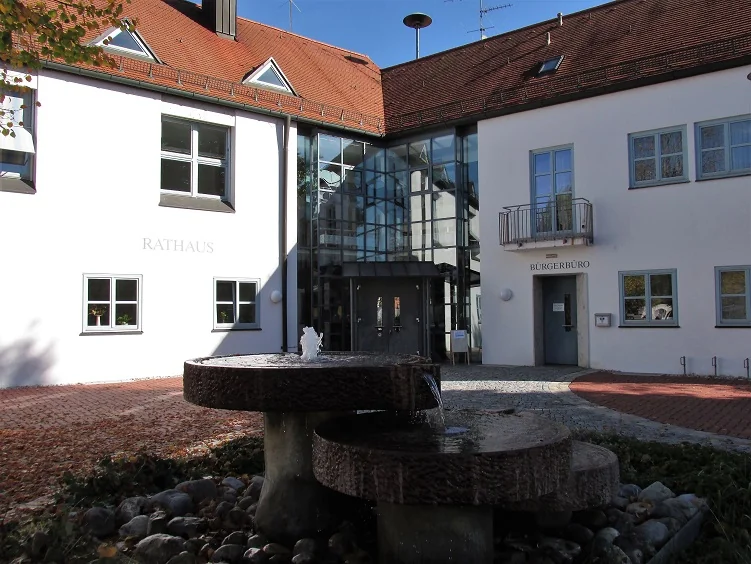
Vierkirchen
Schulweg 1, 85256 Vierkirchen, Deutschland
Community of Vierkirchen | Opening Hours & Citizens' Office
The community of Vierkirchen is initially a search term for many people for very practical matters: opening hours, telephone number, citizens' office, mayor, building authority, municipal council, local elections, or waste collection. That is why a clear overview of this administrative community in the district of Dachau is worthwhile. Despite individual search queries with Saxony or Upper Lusatia, Vierkirchen is actually located in Upper Bavaria, about 14 kilometers north of the large district town of Dachau. The community combines a rural location, short distances, and a functioning citizen service with a long history that dates back to the early Middle Ages. Those who wish to take care of something there will find the central point for many administrative questions at Schulweg 1. This is not only helpful for new residents but also for anyone who wants to orient themselves quickly and know which office is responsible for what. ([vierkirchen.de](https://www.vierkirchen.de/68/start?utm_source=openai))
Opening Hours, Citizens' Office, and Contact
The town hall of the community of Vierkirchen at Schulweg 1 is the central address for administration, service, and appointments. The general opening hours are Monday to Friday between 08:00 and 12:00, and on Thursday additionally between 14:00 and 18:00; visits are also possible by appointment. Those who do not want to come by spontaneously can call the central phone number 08139 9314-0 or work directly with the citizens' office, which is listed on the website with 08139 9314-21 and 08139 9314-22. In practice, the citizens' office is the first address for many standard concerns of everyday life: registrations, re-registrations and cancellations, identity cards, passports, electronic identity cards, simple certificates of good conduct, information from the registration office, lost property, business registrations and cancellations, certified documents, natural swimming pool cards, and other citizen-related administrative tasks. Online appointments are also possible, making visits more manageable and reducing waiting times. The community also provides digital access such as Rathaus Online and the citizen information system, so that certain concerns can be prepared without having to go to the building. For many residents, this mix of personal proximity and digital accessibility is important: those who want to clarify a question quickly can call or book an appointment online; those who need to submit documents or pick up certificates find clear responsibilities and regulated times on-site. This makes Vierkirchen as an administration not more anonymous than necessary, but well accessible, manageable, and functional. ([vierkirchen.de](https://www.vierkirchen.de/73/gemeinde?utm_source=openai))
Mayor, Municipal Council, and Political Tasks
The community of Vierkirchen is politically led by the First Mayor Harald Dirlenbach. His office is located in the town hall, room OG 3, and the contact details for making appointments are also provided on the mayor's office page. As deputies, the Second Mayor Siegfried Nefzger and the Third Mayor Michael Grimmer are named on the website. This is important for citizens because many concerns are anchored not only at the employee level but also at the political level: decisions on infrastructure, building areas, social issues, culture, childcare, or the environment are made in Vierkirchen through the municipal council and its committees. The website of the community publicly documents the municipal council factions and committees. These include, among others, the building committee, finance committee, main and culture committee, childcare committee, audit committee, and environmental advisory board. This shows that municipal work is organized in clear responsibilities and cannot be reduced to a single office. Those who want to understand how Vierkirchen works politically quickly realize: here, administration and volunteer work, formality and common good, municipal responsibility and local proximity are interconnected. The municipal council deals with topics such as land-use planning, fees, childcare, traffic, the environment, and public facilities. That these topics are available online is also an advantage, as the community publishes resolutions, information, and current announcements on its website. For search queries such as mayor, municipal council, or election, Vierkirchen is therefore not just a name but a well-structured administrative location with clear contacts and understandable processes. ([vierkirchen.de](https://www.vierkirchen.de/99/gemeinde/buergermeister?utm_source=openai))
Building Authority, Land-Use Planning, and Property Issues
The building authority of the community of Vierkirchen is one of the most important points of contact for anyone who wants to build, remodel, expand, or deal with property and development issues. The website explicitly states that current land register extracts for building applications can be ordered and collected at the town hall during usual office hours. Binding development plans are also kept at the building authority, while internet versions, according to the community, only serve citizen information and have no legally binding effect. This is a crucial difference in practice, as the binding information always counts for construction projects. In addition, the building authority is responsible for property matters as well as production and development contributions. The community also specifies concrete contribution rates, including 2.34 euros per square meter of land area and 17.38 euros per square meter of floor area in connection with drainage. It is also described that changes to properties or floor areas must be reported so that the fee calculation remains correct. According to the community, the building authority is responsible for Vierkirchen, Esterhofen, Pasenbach, Ramelsbach, and Jedenhofen. This is relevant for builders, owners, and project developers because the formal paths are clearly defined and many questions can be clarified early on before costs or delays arise. In the combination of building authority, land-use planning, and town hall service, it becomes clear how closely community development is organized: from the first idea to the site plan to the binding statute. So, anyone searching for the building authority of Vierkirchen, land-use planning, or property matters will find here not just a desk but a municipal control center for planning, order, and infrastructure. ([vierkirchen.de](https://www.vierkirchen.de/content/373/467/rathaus/bauamt/allgemeine-informationen?utm_source=openai))
Local Elections, Election Results, and Election Service
In the topics of local elections and election results, the community of Vierkirchen is also digitally present. The town hall page publishes the election results for the local elections in 2026; additionally, the community informs about current election notices, the process for postal voting, and special opening hours of the citizens' office as the election office. The current announcements show that election service in Vierkirchen consists of more than just a notice board, but from several components: information on local elections, the provision of postal voting documents, information on the responsibilities of the citizens' office, and the publication of preliminary results. This is particularly helpful for people searching for election results in Vierkirchen or local elections in Vierkirchen who do not want to spend a long time gathering what applies locally. The community uses its town hall area and the page with official announcements for this purpose. In March 2026, the preliminary results of the municipal council election and that of the First Mayor were published there; at the same time, the citizens' office was separately staffed in connection with election administration. This shows that local democracy is very practically organized on-site: election notification, postal voting, election office, result publication, and citizen communication are interconnected. Those interested in political participation will find here not only numbers but also the organizational foundation behind it. For SEO-relevant search queries, this is important because the community is one of the points of contact where official information is directly available from the source. Especially during election times, this is a trust factor, as correct and timely information is just as important for citizens as the actual results. ([vierkirchen.de](https://www.vierkirchen.de/74/rathaus?utm_source=openai))
Waste Collection, Recycling Center, and Disposal Calendar
In terms of waste collection, Vierkirchen is closely linked to the waste management of the Dachau district. The community's website points out that the waste advice of the district is responsible for questions regarding disposal. There, residual waste bins and organic bins can be registered, re-registered, or canceled; additionally, owner changes, direct debit authorizations, changes to bank details, exchanges of defective waste containers, waste communities, as well as bulky waste and appliance collections are possible. The community also explains that current disposal calendars are available at recycling centers and in municipal administrations, and that collection dates can also be retrieved online and via the DAH-Müll app. For many households, this is practical because residual waste, organic waste, yellow bin, blue bin, and dates for problem waste can be easily looked up. Those who additionally want to use the recycling center in Vierkirchen will find it on Glonntalstraße. According to the community, it is open Tuesday to Friday from 15:00 to 18:00 and Saturday from 10:00 to 15:00; the telephone availability is through 08139 8347. This shows that waste collection is not just an abstract obligation but is organized with clear responsibilities and fixed paths. For search queries such as waste collection in Vierkirchen, recycling center in Vierkirchen, or disposal calendar in Vierkirchen, the community is therefore a clear hit because it provides the most important information bundled. Knowing the dates and opening hours saves time, avoids misdrives, and allows for waste disposal to be planned into everyday life. ([vierkirchen.de](https://www.vierkirchen.de/content/675/585/rathaus/wo-erledige-ich-was/kanalgebuehren?utm_source=openai))
History, Location, and Special Features of Vierkirchen
Vierkirchen is not only administration but also a historically grown place with its own profile. The community describes itself as modern, open, tolerant, colorful, and lively and points out that it is located in the district of Dachau, 14 kilometers north of the large district town of Dachau. The homepage also emphasizes that Vierkirchen was founded in 779; in church history, the locality is first explicitly mentioned in 820, and possibly the parish was already delineated around 779 under Bishop Aribo. This early history is more than a curious detail, as it explains why Vierkirchen is strongly associated with tradition and identity for many residents. At the same time, the community has set modern accents in recent decades. The homepage mentions more than 40 clubs, and well-known beyond the community borders are, among others, Leonhardiritt, Faschingszug, Christkindlmarkt, and the brass band of the music association. Additionally, there is an attractive natural swimming pool, a sports facility with a clubhouse, a tennis hall, and the Josef-Wallner triple hall with a stage. The natural swimming pool itself is a special example of civic engagement: it was created in 2003 and 2004 in place of the former sewage treatment plant, offers 2000 square meters of water surface, works with a 1500 square meter regeneration pond system, and dispenses with conventional chemicals. Access is only possible on foot or by bicycle; there is no parking available for cars, except for proven severe disabilities. All these points show that Vierkirchen is not only a seat of municipal administration but a place with a rich history, strong club life, and clear local features that are always relevant in search queries for community, Upper Bavaria, history, or natural swimming pool. ([vierkirchen.de](https://www.vierkirchen.de/68/start?utm_source=openai))
Sources:
- Homepage - Community of Vierkirchen
- Community of Vierkirchen - Contact and Opening Hours
- Citizens' Office - Community of Vierkirchen
- Mayor - Community of Vierkirchen
- Building Authority - Community of Vierkirchen
- Building Authority Services - Community of Vierkirchen
- Election Results Local Election 2026 - Community of Vierkirchen
- Waste Disposal and Recycling Center - Community of Vierkirchen
- Church History - Community of Vierkirchen
- Natural Swimming Pool Vierkirchen - Community of Vierkirchen
Show moreShow less
Community of Vierkirchen | Opening Hours & Citizens' Office
The community of Vierkirchen is initially a search term for many people for very practical matters: opening hours, telephone number, citizens' office, mayor, building authority, municipal council, local elections, or waste collection. That is why a clear overview of this administrative community in the district of Dachau is worthwhile. Despite individual search queries with Saxony or Upper Lusatia, Vierkirchen is actually located in Upper Bavaria, about 14 kilometers north of the large district town of Dachau. The community combines a rural location, short distances, and a functioning citizen service with a long history that dates back to the early Middle Ages. Those who wish to take care of something there will find the central point for many administrative questions at Schulweg 1. This is not only helpful for new residents but also for anyone who wants to orient themselves quickly and know which office is responsible for what. ([vierkirchen.de](https://www.vierkirchen.de/68/start?utm_source=openai))
Opening Hours, Citizens' Office, and Contact
The town hall of the community of Vierkirchen at Schulweg 1 is the central address for administration, service, and appointments. The general opening hours are Monday to Friday between 08:00 and 12:00, and on Thursday additionally between 14:00 and 18:00; visits are also possible by appointment. Those who do not want to come by spontaneously can call the central phone number 08139 9314-0 or work directly with the citizens' office, which is listed on the website with 08139 9314-21 and 08139 9314-22. In practice, the citizens' office is the first address for many standard concerns of everyday life: registrations, re-registrations and cancellations, identity cards, passports, electronic identity cards, simple certificates of good conduct, information from the registration office, lost property, business registrations and cancellations, certified documents, natural swimming pool cards, and other citizen-related administrative tasks. Online appointments are also possible, making visits more manageable and reducing waiting times. The community also provides digital access such as Rathaus Online and the citizen information system, so that certain concerns can be prepared without having to go to the building. For many residents, this mix of personal proximity and digital accessibility is important: those who want to clarify a question quickly can call or book an appointment online; those who need to submit documents or pick up certificates find clear responsibilities and regulated times on-site. This makes Vierkirchen as an administration not more anonymous than necessary, but well accessible, manageable, and functional. ([vierkirchen.de](https://www.vierkirchen.de/73/gemeinde?utm_source=openai))
Mayor, Municipal Council, and Political Tasks
The community of Vierkirchen is politically led by the First Mayor Harald Dirlenbach. His office is located in the town hall, room OG 3, and the contact details for making appointments are also provided on the mayor's office page. As deputies, the Second Mayor Siegfried Nefzger and the Third Mayor Michael Grimmer are named on the website. This is important for citizens because many concerns are anchored not only at the employee level but also at the political level: decisions on infrastructure, building areas, social issues, culture, childcare, or the environment are made in Vierkirchen through the municipal council and its committees. The website of the community publicly documents the municipal council factions and committees. These include, among others, the building committee, finance committee, main and culture committee, childcare committee, audit committee, and environmental advisory board. This shows that municipal work is organized in clear responsibilities and cannot be reduced to a single office. Those who want to understand how Vierkirchen works politically quickly realize: here, administration and volunteer work, formality and common good, municipal responsibility and local proximity are interconnected. The municipal council deals with topics such as land-use planning, fees, childcare, traffic, the environment, and public facilities. That these topics are available online is also an advantage, as the community publishes resolutions, information, and current announcements on its website. For search queries such as mayor, municipal council, or election, Vierkirchen is therefore not just a name but a well-structured administrative location with clear contacts and understandable processes. ([vierkirchen.de](https://www.vierkirchen.de/99/gemeinde/buergermeister?utm_source=openai))
Building Authority, Land-Use Planning, and Property Issues
The building authority of the community of Vierkirchen is one of the most important points of contact for anyone who wants to build, remodel, expand, or deal with property and development issues. The website explicitly states that current land register extracts for building applications can be ordered and collected at the town hall during usual office hours. Binding development plans are also kept at the building authority, while internet versions, according to the community, only serve citizen information and have no legally binding effect. This is a crucial difference in practice, as the binding information always counts for construction projects. In addition, the building authority is responsible for property matters as well as production and development contributions. The community also specifies concrete contribution rates, including 2.34 euros per square meter of land area and 17.38 euros per square meter of floor area in connection with drainage. It is also described that changes to properties or floor areas must be reported so that the fee calculation remains correct. According to the community, the building authority is responsible for Vierkirchen, Esterhofen, Pasenbach, Ramelsbach, and Jedenhofen. This is relevant for builders, owners, and project developers because the formal paths are clearly defined and many questions can be clarified early on before costs or delays arise. In the combination of building authority, land-use planning, and town hall service, it becomes clear how closely community development is organized: from the first idea to the site plan to the binding statute. So, anyone searching for the building authority of Vierkirchen, land-use planning, or property matters will find here not just a desk but a municipal control center for planning, order, and infrastructure. ([vierkirchen.de](https://www.vierkirchen.de/content/373/467/rathaus/bauamt/allgemeine-informationen?utm_source=openai))
Local Elections, Election Results, and Election Service
In the topics of local elections and election results, the community of Vierkirchen is also digitally present. The town hall page publishes the election results for the local elections in 2026; additionally, the community informs about current election notices, the process for postal voting, and special opening hours of the citizens' office as the election office. The current announcements show that election service in Vierkirchen consists of more than just a notice board, but from several components: information on local elections, the provision of postal voting documents, information on the responsibilities of the citizens' office, and the publication of preliminary results. This is particularly helpful for people searching for election results in Vierkirchen or local elections in Vierkirchen who do not want to spend a long time gathering what applies locally. The community uses its town hall area and the page with official announcements for this purpose. In March 2026, the preliminary results of the municipal council election and that of the First Mayor were published there; at the same time, the citizens' office was separately staffed in connection with election administration. This shows that local democracy is very practically organized on-site: election notification, postal voting, election office, result publication, and citizen communication are interconnected. Those interested in political participation will find here not only numbers but also the organizational foundation behind it. For SEO-relevant search queries, this is important because the community is one of the points of contact where official information is directly available from the source. Especially during election times, this is a trust factor, as correct and timely information is just as important for citizens as the actual results. ([vierkirchen.de](https://www.vierkirchen.de/74/rathaus?utm_source=openai))
Waste Collection, Recycling Center, and Disposal Calendar
In terms of waste collection, Vierkirchen is closely linked to the waste management of the Dachau district. The community's website points out that the waste advice of the district is responsible for questions regarding disposal. There, residual waste bins and organic bins can be registered, re-registered, or canceled; additionally, owner changes, direct debit authorizations, changes to bank details, exchanges of defective waste containers, waste communities, as well as bulky waste and appliance collections are possible. The community also explains that current disposal calendars are available at recycling centers and in municipal administrations, and that collection dates can also be retrieved online and via the DAH-Müll app. For many households, this is practical because residual waste, organic waste, yellow bin, blue bin, and dates for problem waste can be easily looked up. Those who additionally want to use the recycling center in Vierkirchen will find it on Glonntalstraße. According to the community, it is open Tuesday to Friday from 15:00 to 18:00 and Saturday from 10:00 to 15:00; the telephone availability is through 08139 8347. This shows that waste collection is not just an abstract obligation but is organized with clear responsibilities and fixed paths. For search queries such as waste collection in Vierkirchen, recycling center in Vierkirchen, or disposal calendar in Vierkirchen, the community is therefore a clear hit because it provides the most important information bundled. Knowing the dates and opening hours saves time, avoids misdrives, and allows for waste disposal to be planned into everyday life. ([vierkirchen.de](https://www.vierkirchen.de/content/675/585/rathaus/wo-erledige-ich-was/kanalgebuehren?utm_source=openai))
History, Location, and Special Features of Vierkirchen
Vierkirchen is not only administration but also a historically grown place with its own profile. The community describes itself as modern, open, tolerant, colorful, and lively and points out that it is located in the district of Dachau, 14 kilometers north of the large district town of Dachau. The homepage also emphasizes that Vierkirchen was founded in 779; in church history, the locality is first explicitly mentioned in 820, and possibly the parish was already delineated around 779 under Bishop Aribo. This early history is more than a curious detail, as it explains why Vierkirchen is strongly associated with tradition and identity for many residents. At the same time, the community has set modern accents in recent decades. The homepage mentions more than 40 clubs, and well-known beyond the community borders are, among others, Leonhardiritt, Faschingszug, Christkindlmarkt, and the brass band of the music association. Additionally, there is an attractive natural swimming pool, a sports facility with a clubhouse, a tennis hall, and the Josef-Wallner triple hall with a stage. The natural swimming pool itself is a special example of civic engagement: it was created in 2003 and 2004 in place of the former sewage treatment plant, offers 2000 square meters of water surface, works with a 1500 square meter regeneration pond system, and dispenses with conventional chemicals. Access is only possible on foot or by bicycle; there is no parking available for cars, except for proven severe disabilities. All these points show that Vierkirchen is not only a seat of municipal administration but a place with a rich history, strong club life, and clear local features that are always relevant in search queries for community, Upper Bavaria, history, or natural swimming pool. ([vierkirchen.de](https://www.vierkirchen.de/68/start?utm_source=openai))
Sources:
- Homepage - Community of Vierkirchen
- Community of Vierkirchen - Contact and Opening Hours
- Citizens' Office - Community of Vierkirchen
- Mayor - Community of Vierkirchen
- Building Authority - Community of Vierkirchen
- Building Authority Services - Community of Vierkirchen
- Election Results Local Election 2026 - Community of Vierkirchen
- Waste Disposal and Recycling Center - Community of Vierkirchen
- Church History - Community of Vierkirchen
- Natural Swimming Pool Vierkirchen - Community of Vierkirchen
Community of Vierkirchen | Opening Hours & Citizens' Office
The community of Vierkirchen is initially a search term for many people for very practical matters: opening hours, telephone number, citizens' office, mayor, building authority, municipal council, local elections, or waste collection. That is why a clear overview of this administrative community in the district of Dachau is worthwhile. Despite individual search queries with Saxony or Upper Lusatia, Vierkirchen is actually located in Upper Bavaria, about 14 kilometers north of the large district town of Dachau. The community combines a rural location, short distances, and a functioning citizen service with a long history that dates back to the early Middle Ages. Those who wish to take care of something there will find the central point for many administrative questions at Schulweg 1. This is not only helpful for new residents but also for anyone who wants to orient themselves quickly and know which office is responsible for what. ([vierkirchen.de](https://www.vierkirchen.de/68/start?utm_source=openai))
Opening Hours, Citizens' Office, and Contact
The town hall of the community of Vierkirchen at Schulweg 1 is the central address for administration, service, and appointments. The general opening hours are Monday to Friday between 08:00 and 12:00, and on Thursday additionally between 14:00 and 18:00; visits are also possible by appointment. Those who do not want to come by spontaneously can call the central phone number 08139 9314-0 or work directly with the citizens' office, which is listed on the website with 08139 9314-21 and 08139 9314-22. In practice, the citizens' office is the first address for many standard concerns of everyday life: registrations, re-registrations and cancellations, identity cards, passports, electronic identity cards, simple certificates of good conduct, information from the registration office, lost property, business registrations and cancellations, certified documents, natural swimming pool cards, and other citizen-related administrative tasks. Online appointments are also possible, making visits more manageable and reducing waiting times. The community also provides digital access such as Rathaus Online and the citizen information system, so that certain concerns can be prepared without having to go to the building. For many residents, this mix of personal proximity and digital accessibility is important: those who want to clarify a question quickly can call or book an appointment online; those who need to submit documents or pick up certificates find clear responsibilities and regulated times on-site. This makes Vierkirchen as an administration not more anonymous than necessary, but well accessible, manageable, and functional. ([vierkirchen.de](https://www.vierkirchen.de/73/gemeinde?utm_source=openai))
Mayor, Municipal Council, and Political Tasks
The community of Vierkirchen is politically led by the First Mayor Harald Dirlenbach. His office is located in the town hall, room OG 3, and the contact details for making appointments are also provided on the mayor's office page. As deputies, the Second Mayor Siegfried Nefzger and the Third Mayor Michael Grimmer are named on the website. This is important for citizens because many concerns are anchored not only at the employee level but also at the political level: decisions on infrastructure, building areas, social issues, culture, childcare, or the environment are made in Vierkirchen through the municipal council and its committees. The website of the community publicly documents the municipal council factions and committees. These include, among others, the building committee, finance committee, main and culture committee, childcare committee, audit committee, and environmental advisory board. This shows that municipal work is organized in clear responsibilities and cannot be reduced to a single office. Those who want to understand how Vierkirchen works politically quickly realize: here, administration and volunteer work, formality and common good, municipal responsibility and local proximity are interconnected. The municipal council deals with topics such as land-use planning, fees, childcare, traffic, the environment, and public facilities. That these topics are available online is also an advantage, as the community publishes resolutions, information, and current announcements on its website. For search queries such as mayor, municipal council, or election, Vierkirchen is therefore not just a name but a well-structured administrative location with clear contacts and understandable processes. ([vierkirchen.de](https://www.vierkirchen.de/99/gemeinde/buergermeister?utm_source=openai))
Building Authority, Land-Use Planning, and Property Issues
The building authority of the community of Vierkirchen is one of the most important points of contact for anyone who wants to build, remodel, expand, or deal with property and development issues. The website explicitly states that current land register extracts for building applications can be ordered and collected at the town hall during usual office hours. Binding development plans are also kept at the building authority, while internet versions, according to the community, only serve citizen information and have no legally binding effect. This is a crucial difference in practice, as the binding information always counts for construction projects. In addition, the building authority is responsible for property matters as well as production and development contributions. The community also specifies concrete contribution rates, including 2.34 euros per square meter of land area and 17.38 euros per square meter of floor area in connection with drainage. It is also described that changes to properties or floor areas must be reported so that the fee calculation remains correct. According to the community, the building authority is responsible for Vierkirchen, Esterhofen, Pasenbach, Ramelsbach, and Jedenhofen. This is relevant for builders, owners, and project developers because the formal paths are clearly defined and many questions can be clarified early on before costs or delays arise. In the combination of building authority, land-use planning, and town hall service, it becomes clear how closely community development is organized: from the first idea to the site plan to the binding statute. So, anyone searching for the building authority of Vierkirchen, land-use planning, or property matters will find here not just a desk but a municipal control center for planning, order, and infrastructure. ([vierkirchen.de](https://www.vierkirchen.de/content/373/467/rathaus/bauamt/allgemeine-informationen?utm_source=openai))
Local Elections, Election Results, and Election Service
In the topics of local elections and election results, the community of Vierkirchen is also digitally present. The town hall page publishes the election results for the local elections in 2026; additionally, the community informs about current election notices, the process for postal voting, and special opening hours of the citizens' office as the election office. The current announcements show that election service in Vierkirchen consists of more than just a notice board, but from several components: information on local elections, the provision of postal voting documents, information on the responsibilities of the citizens' office, and the publication of preliminary results. This is particularly helpful for people searching for election results in Vierkirchen or local elections in Vierkirchen who do not want to spend a long time gathering what applies locally. The community uses its town hall area and the page with official announcements for this purpose. In March 2026, the preliminary results of the municipal council election and that of the First Mayor were published there; at the same time, the citizens' office was separately staffed in connection with election administration. This shows that local democracy is very practically organized on-site: election notification, postal voting, election office, result publication, and citizen communication are interconnected. Those interested in political participation will find here not only numbers but also the organizational foundation behind it. For SEO-relevant search queries, this is important because the community is one of the points of contact where official information is directly available from the source. Especially during election times, this is a trust factor, as correct and timely information is just as important for citizens as the actual results. ([vierkirchen.de](https://www.vierkirchen.de/74/rathaus?utm_source=openai))
Waste Collection, Recycling Center, and Disposal Calendar
In terms of waste collection, Vierkirchen is closely linked to the waste management of the Dachau district. The community's website points out that the waste advice of the district is responsible for questions regarding disposal. There, residual waste bins and organic bins can be registered, re-registered, or canceled; additionally, owner changes, direct debit authorizations, changes to bank details, exchanges of defective waste containers, waste communities, as well as bulky waste and appliance collections are possible. The community also explains that current disposal calendars are available at recycling centers and in municipal administrations, and that collection dates can also be retrieved online and via the DAH-Müll app. For many households, this is practical because residual waste, organic waste, yellow bin, blue bin, and dates for problem waste can be easily looked up. Those who additionally want to use the recycling center in Vierkirchen will find it on Glonntalstraße. According to the community, it is open Tuesday to Friday from 15:00 to 18:00 and Saturday from 10:00 to 15:00; the telephone availability is through 08139 8347. This shows that waste collection is not just an abstract obligation but is organized with clear responsibilities and fixed paths. For search queries such as waste collection in Vierkirchen, recycling center in Vierkirchen, or disposal calendar in Vierkirchen, the community is therefore a clear hit because it provides the most important information bundled. Knowing the dates and opening hours saves time, avoids misdrives, and allows for waste disposal to be planned into everyday life. ([vierkirchen.de](https://www.vierkirchen.de/content/675/585/rathaus/wo-erledige-ich-was/kanalgebuehren?utm_source=openai))
History, Location, and Special Features of Vierkirchen
Vierkirchen is not only administration but also a historically grown place with its own profile. The community describes itself as modern, open, tolerant, colorful, and lively and points out that it is located in the district of Dachau, 14 kilometers north of the large district town of Dachau. The homepage also emphasizes that Vierkirchen was founded in 779; in church history, the locality is first explicitly mentioned in 820, and possibly the parish was already delineated around 779 under Bishop Aribo. This early history is more than a curious detail, as it explains why Vierkirchen is strongly associated with tradition and identity for many residents. At the same time, the community has set modern accents in recent decades. The homepage mentions more than 40 clubs, and well-known beyond the community borders are, among others, Leonhardiritt, Faschingszug, Christkindlmarkt, and the brass band of the music association. Additionally, there is an attractive natural swimming pool, a sports facility with a clubhouse, a tennis hall, and the Josef-Wallner triple hall with a stage. The natural swimming pool itself is a special example of civic engagement: it was created in 2003 and 2004 in place of the former sewage treatment plant, offers 2000 square meters of water surface, works with a 1500 square meter regeneration pond system, and dispenses with conventional chemicals. Access is only possible on foot or by bicycle; there is no parking available for cars, except for proven severe disabilities. All these points show that Vierkirchen is not only a seat of municipal administration but a place with a rich history, strong club life, and clear local features that are always relevant in search queries for community, Upper Bavaria, history, or natural swimming pool. ([vierkirchen.de](https://www.vierkirchen.de/68/start?utm_source=openai))
Sources:
- Homepage - Community of Vierkirchen
- Community of Vierkirchen - Contact and Opening Hours
- Citizens' Office - Community of Vierkirchen
- Mayor - Community of Vierkirchen
- Building Authority - Community of Vierkirchen
- Building Authority Services - Community of Vierkirchen
- Election Results Local Election 2026 - Community of Vierkirchen
- Waste Disposal and Recycling Center - Community of Vierkirchen
- Church History - Community of Vierkirchen
- Natural Swimming Pool Vierkirchen - Community of Vierkirchen
Upcoming Events
No events found
Frequently Asked Questions
Reviews
No reviews found