
Dachau
85221 Dachau, Deutschland
Memorial Site of the Former SS Shooting Range Hebertshausen | History
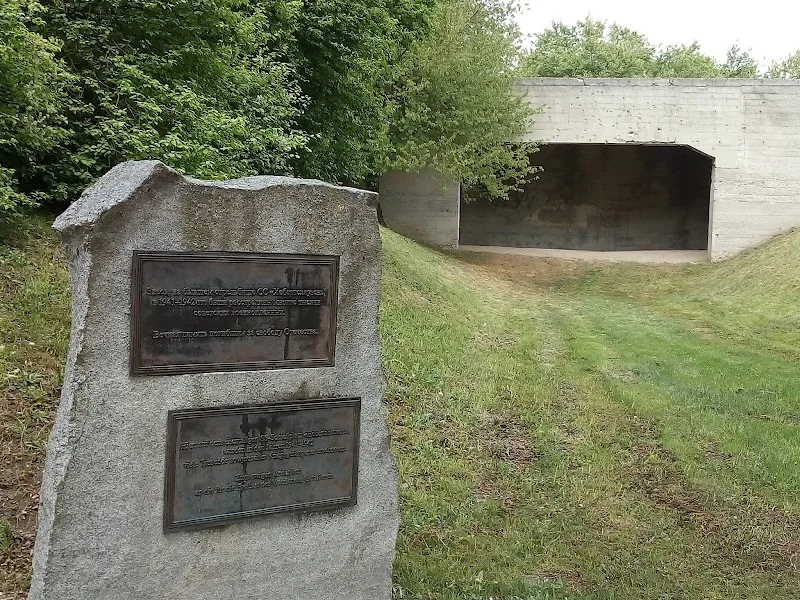
Those searching for the memorial site of the former SS shooting range Hebertshausen will encounter a historical place of remembrance in the north of Dachau, which should not be understood as a classic event venue, but rather as a place of remembrance and enlightenment. The former shooting range is located about two kilometers north of the Dachau concentration camp in Hebertshausen. Today, a memorial with an outdoor exhibition, the 1964 monument, and the installation 'Place of Names' remind us of the crimes committed here. It is especially important for visitors: The access is signposted, there is a parking lot on the premises, and practical information for tours is provided by the Dachau concentration camp memorial site. ([kz-gedenkstaette-dachau.de](https://www.kz-gedenkstaette-dachau.de/historischer-ort/virtueller-rundgang-umgebung/ss-schiessplatz-hebertshausen/))
History of the SS Shooting Range Hebertshausen
The historical development of the site began with the establishment of the shooting range by the SS in 1937/38. According to official accounts, the area was created about two kilometers north of the Dachau concentration camp near the municipality of Hebertshausen. It initially served for weapon training. The area contained five shooting ranges, two shooting stands, a grenade throwing stand, and a service building. This sober description of the facility makes it clear that a functional training site of the SS was created here, which was integrated into the apparatus of Nazi terror from the very beginning. The location was not chosen by chance: it was in close proximity to the Dachau camp complex and was thus closely linked to the structure of the SS in the region. ([kz-gedenkstaette-dachau.de](https://www.kz-gedenkstaette-dachau.de/historischer-ort/virtueller-rundgang-umgebung/ss-schiessplatz-hebertshausen/))
By at least 1941, the significance of the site changed radically. The SS used the shooting range as a place of execution and carried out mass executions there. The official memorial information states that between October 1941 and summer 1942, over 4,000 Soviet prisoners of war were murdered at the Hebertshausen shooting range. Thus, a training site became a central crime scene of Nazi atrocities. After the war, local and later institutional remembrance began: in 1964, the Dachau camp community erected the first monument. In 2014, the area was finally transformed into a memorial site with an outdoor exhibition. This development shows how a place of violence gradually became a site of public remembrance. ([kz-gedenkstaette-dachau.de](https://www.kz-gedenkstaette-dachau.de/historischer-ort/virtueller-rundgang-umgebung/ss-schiessplatz-hebertshausen/))
Over 4,000 Soviet Prisoners of War and the Victims
To understand the significance of Hebertshausen, the historical context of the war against the Soviet Union must be taken into account. With the German attack on June 22, 1941, a war of extermination began, characterized by Nazi ideology and racist criteria. The official representation of the memorial explains that the Wehrmacht and the Gestapo segregated at least 33,000 Soviet prisoners of war based on political and ideological criteria. Communist officials, intellectuals, and Jews were taken to concentration camps in violation of international law and murdered there. The Hebertshausen shooting range was part of this context of violence and exemplifies the systematic dehumanization of Soviet prisoners in the Nazi regime. ([kz-gedenkstaette-dachau.de](https://www.kz-gedenkstaette-dachau.de/historischer-ort/virtueller-rundgang-umgebung/ss-schiessplatz-hebertshausen/))
The number of victims makes the site one of the most important places of remembrance in the vicinity of the Dachau concentration camp. Soviet prisoners of war were often killed immediately upon arrival at the site; initial shootings reportedly even took place in the bunker courtyard before the mass executions were moved to the shooting range. The victims were stripped, lined up, chained, and shot. Such details are distressing, but they explain why the current memorial not only provides historical information but also consciously recalls the individual dimension of the crime. The later added installation 'Place of Names' anchors this memory specifically to the individuals whose identities have been made visible as far as known. This prevents the site from being reduced to statistics, making it an experience of personalized remembrance. ([kz-gedenkstaette-dachau.de](https://www.kz-gedenkstaette-dachau.de/historischer-ort/virtueller-rundgang-umgebung/ss-schiessplatz-hebertshausen/))
Outdoor Exhibition and Place of Names
Since May 2014, an outdoor exhibition has informed about the memorial site. The official event description lists the contents as the historical background of the crime, the biographies of victims, the role of the perpetrators, and the knowledge of the population about the crimes. This form of communication is important because it does not consider the shooting range in isolation but places it in a larger historical context. Visitors receive not only a brief collection of data but also a comprehensible classification of the crime scene. The fact that the exhibition is laid out outdoors fits the character of the site: the topography remains discernible, and the path across the area itself becomes part of the remembrance process. ([dachau.de](https://www.dachau.de/veranstaltungen/detail/event/themenrundgang-gedenkort-ehemaliger-ss-schiessplatz-hebertshausen-1.html?utm_source=openai)
Particularly striking is the installation 'Place of Names'. According to the official description, the known names of the victims are recorded there and regularly updated. These names are not merely an addition to the exhibition but its emotional core. Those who visit the site experience not only a story of persecution and murder but also encounter concrete biographies. The 1964 monument also remains part of the ensemble, connecting older forms of remembrance with the current exhibition design. Furthermore, the site is explicitly understood in the redesign as a place of remembrance, which is also designated as a cemetery. This underscores the respect for the dead and makes it clear that this is not an ordinary historical site, but a place of quiet, dignified remembrance. ([kz-gedenkstaette-dachau.de](https://www.kz-gedenkstaette-dachau.de/historischer-ort/virtueller-rundgang-umgebung/ss-schiessplatz-hebertshausen/))
Access and Parking at the Memorial Site
The official directions for access are very specific. The city of Dachau describes the access from the area of the concentration camp memorial site: those departing from the parking lot there initially head towards Hebertshausen, turn off before the town at the sign for the former SS shooting range, drive along the tree-lined road, and then reach the parking lot. This information is particularly helpful for people visiting the site for the first time and needing to orient themselves in the Dachau area of remembrance. Additionally, the event page names the venue as the memorial site of the former SS shooting range Hebertshausen on Freisinger Straße in 85221 Dachau and describes the entrance as the end of Freisinger Straße or the beginning of Münchner Straße in Hebertshausen. This makes the exact location easy to navigate. ([dachau.de](https://www.dachau.de/en/tourism/concentration-camp-memorial-site/commemorative-sites.html?utm_source=openai))
The practical access to the parking lot is also clearly stated: the meeting point for tours is at the parking lot of the memorial site of the former SS shooting range Hebertshausen. Therefore, those arriving with a navigation system should look for the official meeting point and street designation rather than a general place name. This is sensible because the memorial site is not designed as a large visitor center with many ancillary facilities, but as a clearly defined memorial space with direct access. From an SEO perspective, the search terms 'Access Hebertshausen' and 'Parking Hebertshausen' are particularly relevant. From a visitor's perspective, this means: use the official signage, head towards the entrance at Freisinger Straße or Münchner Straße, and choose the parking lot as the starting point for the tour. This way, the site can be reached without detours. ([dachau.de](https://www.dachau.de/veranstaltungen/detail/event/themenrundgang-gedenkort-ehemaliger-ss-schiessplatz-hebertshausen-1.html))
Barrier-Free Visit, Tours, and Practical Information
The event pages of the Dachau concentration camp memorial site show that the location is used for thematic tours. Guided visits to the memorial site are offered, with registration through the Munich Adult Education Center or directly on the day of the event at the speaker's location. According to the information provided, the tours are limited to a maximum of 30 participants, cost 4 euros or 2 euros reduced, and are accessible for people with disabilities. Additionally, it is noted that the offer is not suitable for individuals under 13 years of age. This information is important as it significantly facilitates the practical planning of a visit. Individuals, families, or groups wishing to visit can therefore assess the conditions in advance. ([dachau.de](https://www.dachau.de/veranstaltungen/detail/event/themenrundgang-gedenkort-ehemaliger-ss-schiessplatz-hebertshausen-1.html))
Moreover, the scope of the official website of the Dachau concentration camp memorial site indicates that the location is embedded in a broad educational and communication offering. The pages list, among other things, tours for groups, seminars, barrier-free offerings, and further historical content. This suggests that Hebertshausen not only exists as a quiet place of remembrance but is also understood as part of an active educational engagement with Nazi history. For visitors, this means: those planning more than a brief stop can connect the site with a deeper historical engagement. Especially at a site so closely linked to the Dachau concentration camp and the murder of Soviet prisoners of war, this educational embedding creates an appropriate framework for the visit. ([kz-gedenkstaette-dachau.de](https://www.kz-gedenkstaette-dachau.de/historischer-ort/virtueller-rundgang-umgebung/ss-schiessplatz-hebertshausen/))
The Memorial Site in the Remembrance Network of Dachau
Hebertshausen is not an isolated place of remembrance. The city of Dachau explicitly lists the former SS shooting range in its overview of memorial sites and places it in the context of other sites that bear witness to Nazi history in the city and its surroundings. The Dachau tourism pages also describe the area of the concentration camp memorial site as a landscape of learning and remembrance. This results in a clear classification: the shooting range belongs to a larger historical network in which various sites together make the violent history of the Dachau area visible. Therefore, search terms like 'Memorial Site Dachau Outdoor Exhibition', 'Dachau Hebertshausen Memorial Site', and 'Memorial Site Former SS Shooting Range Hebertshausen' are particularly appropriate. ([dachau.de](https://www.dachau.de/tourismus/kz-gedenkstaette/erinnerungsorte.html?utm_source=openai))
Particularly important is this classification for the content presentation. The Dachau concentration camp memorial site sees itself as a central place of learning and remembrance; Hebertshausen complements this picture by making a specific crime scene visible that is directly connected to the murder of Soviet prisoners of war. The interplay between the main memorial site, the outdoor site, and the urban remembrance network makes the history more tangible and regionally locatable. Thus, when visiting the site, one experiences not just a single station but a part of the Dachau culture of remembrance, where crime scene, documentation, and commemoration intertwine. For search queries related to Hebertshausen shooting range, Place of Names, and outdoor exhibition, this is the most content-rich perspective: a precisely located, historically documented, and pedagogically prepared place of remembrance that does not explain the past to close it off but to keep it visible and accountable. ([kz-gedenkstaette-dachau.de](https://www.kz-gedenkstaette-dachau.de/historischer-ort/virtueller-rundgang-umgebung/ss-schiessplatz-hebertshausen/))
Sources:
Mehr anzeigenWeniger anzeigen
Memorial Site of the Former SS Shooting Range Hebertshausen | History
Those searching for the memorial site of the former SS shooting range Hebertshausen will encounter a historical place of remembrance in the north of Dachau, which should not be understood as a classic event venue, but rather as a place of remembrance and enlightenment. The former shooting range is located about two kilometers north of the Dachau concentration camp in Hebertshausen. Today, a memorial with an outdoor exhibition, the 1964 monument, and the installation 'Place of Names' remind us of the crimes committed here. It is especially important for visitors: The access is signposted, there is a parking lot on the premises, and practical information for tours is provided by the Dachau concentration camp memorial site. ([kz-gedenkstaette-dachau.de](https://www.kz-gedenkstaette-dachau.de/historischer-ort/virtueller-rundgang-umgebung/ss-schiessplatz-hebertshausen/))
History of the SS Shooting Range Hebertshausen
The historical development of the site began with the establishment of the shooting range by the SS in 1937/38. According to official accounts, the area was created about two kilometers north of the Dachau concentration camp near the municipality of Hebertshausen. It initially served for weapon training. The area contained five shooting ranges, two shooting stands, a grenade throwing stand, and a service building. This sober description of the facility makes it clear that a functional training site of the SS was created here, which was integrated into the apparatus of Nazi terror from the very beginning. The location was not chosen by chance: it was in close proximity to the Dachau camp complex and was thus closely linked to the structure of the SS in the region. ([kz-gedenkstaette-dachau.de](https://www.kz-gedenkstaette-dachau.de/historischer-ort/virtueller-rundgang-umgebung/ss-schiessplatz-hebertshausen/))
By at least 1941, the significance of the site changed radically. The SS used the shooting range as a place of execution and carried out mass executions there. The official memorial information states that between October 1941 and summer 1942, over 4,000 Soviet prisoners of war were murdered at the Hebertshausen shooting range. Thus, a training site became a central crime scene of Nazi atrocities. After the war, local and later institutional remembrance began: in 1964, the Dachau camp community erected the first monument. In 2014, the area was finally transformed into a memorial site with an outdoor exhibition. This development shows how a place of violence gradually became a site of public remembrance. ([kz-gedenkstaette-dachau.de](https://www.kz-gedenkstaette-dachau.de/historischer-ort/virtueller-rundgang-umgebung/ss-schiessplatz-hebertshausen/))
Over 4,000 Soviet Prisoners of War and the Victims
To understand the significance of Hebertshausen, the historical context of the war against the Soviet Union must be taken into account. With the German attack on June 22, 1941, a war of extermination began, characterized by Nazi ideology and racist criteria. The official representation of the memorial explains that the Wehrmacht and the Gestapo segregated at least 33,000 Soviet prisoners of war based on political and ideological criteria. Communist officials, intellectuals, and Jews were taken to concentration camps in violation of international law and murdered there. The Hebertshausen shooting range was part of this context of violence and exemplifies the systematic dehumanization of Soviet prisoners in the Nazi regime. ([kz-gedenkstaette-dachau.de](https://www.kz-gedenkstaette-dachau.de/historischer-ort/virtueller-rundgang-umgebung/ss-schiessplatz-hebertshausen/))
The number of victims makes the site one of the most important places of remembrance in the vicinity of the Dachau concentration camp. Soviet prisoners of war were often killed immediately upon arrival at the site; initial shootings reportedly even took place in the bunker courtyard before the mass executions were moved to the shooting range. The victims were stripped, lined up, chained, and shot. Such details are distressing, but they explain why the current memorial not only provides historical information but also consciously recalls the individual dimension of the crime. The later added installation 'Place of Names' anchors this memory specifically to the individuals whose identities have been made visible as far as known. This prevents the site from being reduced to statistics, making it an experience of personalized remembrance. ([kz-gedenkstaette-dachau.de](https://www.kz-gedenkstaette-dachau.de/historischer-ort/virtueller-rundgang-umgebung/ss-schiessplatz-hebertshausen/))
Outdoor Exhibition and Place of Names
Since May 2014, an outdoor exhibition has informed about the memorial site. The official event description lists the contents as the historical background of the crime, the biographies of victims, the role of the perpetrators, and the knowledge of the population about the crimes. This form of communication is important because it does not consider the shooting range in isolation but places it in a larger historical context. Visitors receive not only a brief collection of data but also a comprehensible classification of the crime scene. The fact that the exhibition is laid out outdoors fits the character of the site: the topography remains discernible, and the path across the area itself becomes part of the remembrance process. ([dachau.de](https://www.dachau.de/veranstaltungen/detail/event/themenrundgang-gedenkort-ehemaliger-ss-schiessplatz-hebertshausen-1.html?utm_source=openai)
Particularly striking is the installation 'Place of Names'. According to the official description, the known names of the victims are recorded there and regularly updated. These names are not merely an addition to the exhibition but its emotional core. Those who visit the site experience not only a story of persecution and murder but also encounter concrete biographies. The 1964 monument also remains part of the ensemble, connecting older forms of remembrance with the current exhibition design. Furthermore, the site is explicitly understood in the redesign as a place of remembrance, which is also designated as a cemetery. This underscores the respect for the dead and makes it clear that this is not an ordinary historical site, but a place of quiet, dignified remembrance. ([kz-gedenkstaette-dachau.de](https://www.kz-gedenkstaette-dachau.de/historischer-ort/virtueller-rundgang-umgebung/ss-schiessplatz-hebertshausen/))
Access and Parking at the Memorial Site
The official directions for access are very specific. The city of Dachau describes the access from the area of the concentration camp memorial site: those departing from the parking lot there initially head towards Hebertshausen, turn off before the town at the sign for the former SS shooting range, drive along the tree-lined road, and then reach the parking lot. This information is particularly helpful for people visiting the site for the first time and needing to orient themselves in the Dachau area of remembrance. Additionally, the event page names the venue as the memorial site of the former SS shooting range Hebertshausen on Freisinger Straße in 85221 Dachau and describes the entrance as the end of Freisinger Straße or the beginning of Münchner Straße in Hebertshausen. This makes the exact location easy to navigate. ([dachau.de](https://www.dachau.de/en/tourism/concentration-camp-memorial-site/commemorative-sites.html?utm_source=openai))
The practical access to the parking lot is also clearly stated: the meeting point for tours is at the parking lot of the memorial site of the former SS shooting range Hebertshausen. Therefore, those arriving with a navigation system should look for the official meeting point and street designation rather than a general place name. This is sensible because the memorial site is not designed as a large visitor center with many ancillary facilities, but as a clearly defined memorial space with direct access. From an SEO perspective, the search terms 'Access Hebertshausen' and 'Parking Hebertshausen' are particularly relevant. From a visitor's perspective, this means: use the official signage, head towards the entrance at Freisinger Straße or Münchner Straße, and choose the parking lot as the starting point for the tour. This way, the site can be reached without detours. ([dachau.de](https://www.dachau.de/veranstaltungen/detail/event/themenrundgang-gedenkort-ehemaliger-ss-schiessplatz-hebertshausen-1.html))
Barrier-Free Visit, Tours, and Practical Information
The event pages of the Dachau concentration camp memorial site show that the location is used for thematic tours. Guided visits to the memorial site are offered, with registration through the Munich Adult Education Center or directly on the day of the event at the speaker's location. According to the information provided, the tours are limited to a maximum of 30 participants, cost 4 euros or 2 euros reduced, and are accessible for people with disabilities. Additionally, it is noted that the offer is not suitable for individuals under 13 years of age. This information is important as it significantly facilitates the practical planning of a visit. Individuals, families, or groups wishing to visit can therefore assess the conditions in advance. ([dachau.de](https://www.dachau.de/veranstaltungen/detail/event/themenrundgang-gedenkort-ehemaliger-ss-schiessplatz-hebertshausen-1.html))
Moreover, the scope of the official website of the Dachau concentration camp memorial site indicates that the location is embedded in a broad educational and communication offering. The pages list, among other things, tours for groups, seminars, barrier-free offerings, and further historical content. This suggests that Hebertshausen not only exists as a quiet place of remembrance but is also understood as part of an active educational engagement with Nazi history. For visitors, this means: those planning more than a brief stop can connect the site with a deeper historical engagement. Especially at a site so closely linked to the Dachau concentration camp and the murder of Soviet prisoners of war, this educational embedding creates an appropriate framework for the visit. ([kz-gedenkstaette-dachau.de](https://www.kz-gedenkstaette-dachau.de/historischer-ort/virtueller-rundgang-umgebung/ss-schiessplatz-hebertshausen/))
The Memorial Site in the Remembrance Network of Dachau
Hebertshausen is not an isolated place of remembrance. The city of Dachau explicitly lists the former SS shooting range in its overview of memorial sites and places it in the context of other sites that bear witness to Nazi history in the city and its surroundings. The Dachau tourism pages also describe the area of the concentration camp memorial site as a landscape of learning and remembrance. This results in a clear classification: the shooting range belongs to a larger historical network in which various sites together make the violent history of the Dachau area visible. Therefore, search terms like 'Memorial Site Dachau Outdoor Exhibition', 'Dachau Hebertshausen Memorial Site', and 'Memorial Site Former SS Shooting Range Hebertshausen' are particularly appropriate. ([dachau.de](https://www.dachau.de/tourismus/kz-gedenkstaette/erinnerungsorte.html?utm_source=openai))
Particularly important is this classification for the content presentation. The Dachau concentration camp memorial site sees itself as a central place of learning and remembrance; Hebertshausen complements this picture by making a specific crime scene visible that is directly connected to the murder of Soviet prisoners of war. The interplay between the main memorial site, the outdoor site, and the urban remembrance network makes the history more tangible and regionally locatable. Thus, when visiting the site, one experiences not just a single station but a part of the Dachau culture of remembrance, where crime scene, documentation, and commemoration intertwine. For search queries related to Hebertshausen shooting range, Place of Names, and outdoor exhibition, this is the most content-rich perspective: a precisely located, historically documented, and pedagogically prepared place of remembrance that does not explain the past to close it off but to keep it visible and accountable. ([kz-gedenkstaette-dachau.de](https://www.kz-gedenkstaette-dachau.de/historischer-ort/virtueller-rundgang-umgebung/ss-schiessplatz-hebertshausen/))
Sources:
Memorial Site of the Former SS Shooting Range Hebertshausen | History
Those searching for the memorial site of the former SS shooting range Hebertshausen will encounter a historical place of remembrance in the north of Dachau, which should not be understood as a classic event venue, but rather as a place of remembrance and enlightenment. The former shooting range is located about two kilometers north of the Dachau concentration camp in Hebertshausen. Today, a memorial with an outdoor exhibition, the 1964 monument, and the installation 'Place of Names' remind us of the crimes committed here. It is especially important for visitors: The access is signposted, there is a parking lot on the premises, and practical information for tours is provided by the Dachau concentration camp memorial site. ([kz-gedenkstaette-dachau.de](https://www.kz-gedenkstaette-dachau.de/historischer-ort/virtueller-rundgang-umgebung/ss-schiessplatz-hebertshausen/))
History of the SS Shooting Range Hebertshausen
The historical development of the site began with the establishment of the shooting range by the SS in 1937/38. According to official accounts, the area was created about two kilometers north of the Dachau concentration camp near the municipality of Hebertshausen. It initially served for weapon training. The area contained five shooting ranges, two shooting stands, a grenade throwing stand, and a service building. This sober description of the facility makes it clear that a functional training site of the SS was created here, which was integrated into the apparatus of Nazi terror from the very beginning. The location was not chosen by chance: it was in close proximity to the Dachau camp complex and was thus closely linked to the structure of the SS in the region. ([kz-gedenkstaette-dachau.de](https://www.kz-gedenkstaette-dachau.de/historischer-ort/virtueller-rundgang-umgebung/ss-schiessplatz-hebertshausen/))
By at least 1941, the significance of the site changed radically. The SS used the shooting range as a place of execution and carried out mass executions there. The official memorial information states that between October 1941 and summer 1942, over 4,000 Soviet prisoners of war were murdered at the Hebertshausen shooting range. Thus, a training site became a central crime scene of Nazi atrocities. After the war, local and later institutional remembrance began: in 1964, the Dachau camp community erected the first monument. In 2014, the area was finally transformed into a memorial site with an outdoor exhibition. This development shows how a place of violence gradually became a site of public remembrance. ([kz-gedenkstaette-dachau.de](https://www.kz-gedenkstaette-dachau.de/historischer-ort/virtueller-rundgang-umgebung/ss-schiessplatz-hebertshausen/))
Over 4,000 Soviet Prisoners of War and the Victims
To understand the significance of Hebertshausen, the historical context of the war against the Soviet Union must be taken into account. With the German attack on June 22, 1941, a war of extermination began, characterized by Nazi ideology and racist criteria. The official representation of the memorial explains that the Wehrmacht and the Gestapo segregated at least 33,000 Soviet prisoners of war based on political and ideological criteria. Communist officials, intellectuals, and Jews were taken to concentration camps in violation of international law and murdered there. The Hebertshausen shooting range was part of this context of violence and exemplifies the systematic dehumanization of Soviet prisoners in the Nazi regime. ([kz-gedenkstaette-dachau.de](https://www.kz-gedenkstaette-dachau.de/historischer-ort/virtueller-rundgang-umgebung/ss-schiessplatz-hebertshausen/))
The number of victims makes the site one of the most important places of remembrance in the vicinity of the Dachau concentration camp. Soviet prisoners of war were often killed immediately upon arrival at the site; initial shootings reportedly even took place in the bunker courtyard before the mass executions were moved to the shooting range. The victims were stripped, lined up, chained, and shot. Such details are distressing, but they explain why the current memorial not only provides historical information but also consciously recalls the individual dimension of the crime. The later added installation 'Place of Names' anchors this memory specifically to the individuals whose identities have been made visible as far as known. This prevents the site from being reduced to statistics, making it an experience of personalized remembrance. ([kz-gedenkstaette-dachau.de](https://www.kz-gedenkstaette-dachau.de/historischer-ort/virtueller-rundgang-umgebung/ss-schiessplatz-hebertshausen/))
Outdoor Exhibition and Place of Names
Since May 2014, an outdoor exhibition has informed about the memorial site. The official event description lists the contents as the historical background of the crime, the biographies of victims, the role of the perpetrators, and the knowledge of the population about the crimes. This form of communication is important because it does not consider the shooting range in isolation but places it in a larger historical context. Visitors receive not only a brief collection of data but also a comprehensible classification of the crime scene. The fact that the exhibition is laid out outdoors fits the character of the site: the topography remains discernible, and the path across the area itself becomes part of the remembrance process. ([dachau.de](https://www.dachau.de/veranstaltungen/detail/event/themenrundgang-gedenkort-ehemaliger-ss-schiessplatz-hebertshausen-1.html?utm_source=openai)
Particularly striking is the installation 'Place of Names'. According to the official description, the known names of the victims are recorded there and regularly updated. These names are not merely an addition to the exhibition but its emotional core. Those who visit the site experience not only a story of persecution and murder but also encounter concrete biographies. The 1964 monument also remains part of the ensemble, connecting older forms of remembrance with the current exhibition design. Furthermore, the site is explicitly understood in the redesign as a place of remembrance, which is also designated as a cemetery. This underscores the respect for the dead and makes it clear that this is not an ordinary historical site, but a place of quiet, dignified remembrance. ([kz-gedenkstaette-dachau.de](https://www.kz-gedenkstaette-dachau.de/historischer-ort/virtueller-rundgang-umgebung/ss-schiessplatz-hebertshausen/))
Access and Parking at the Memorial Site
The official directions for access are very specific. The city of Dachau describes the access from the area of the concentration camp memorial site: those departing from the parking lot there initially head towards Hebertshausen, turn off before the town at the sign for the former SS shooting range, drive along the tree-lined road, and then reach the parking lot. This information is particularly helpful for people visiting the site for the first time and needing to orient themselves in the Dachau area of remembrance. Additionally, the event page names the venue as the memorial site of the former SS shooting range Hebertshausen on Freisinger Straße in 85221 Dachau and describes the entrance as the end of Freisinger Straße or the beginning of Münchner Straße in Hebertshausen. This makes the exact location easy to navigate. ([dachau.de](https://www.dachau.de/en/tourism/concentration-camp-memorial-site/commemorative-sites.html?utm_source=openai))
The practical access to the parking lot is also clearly stated: the meeting point for tours is at the parking lot of the memorial site of the former SS shooting range Hebertshausen. Therefore, those arriving with a navigation system should look for the official meeting point and street designation rather than a general place name. This is sensible because the memorial site is not designed as a large visitor center with many ancillary facilities, but as a clearly defined memorial space with direct access. From an SEO perspective, the search terms 'Access Hebertshausen' and 'Parking Hebertshausen' are particularly relevant. From a visitor's perspective, this means: use the official signage, head towards the entrance at Freisinger Straße or Münchner Straße, and choose the parking lot as the starting point for the tour. This way, the site can be reached without detours. ([dachau.de](https://www.dachau.de/veranstaltungen/detail/event/themenrundgang-gedenkort-ehemaliger-ss-schiessplatz-hebertshausen-1.html))
Barrier-Free Visit, Tours, and Practical Information
The event pages of the Dachau concentration camp memorial site show that the location is used for thematic tours. Guided visits to the memorial site are offered, with registration through the Munich Adult Education Center or directly on the day of the event at the speaker's location. According to the information provided, the tours are limited to a maximum of 30 participants, cost 4 euros or 2 euros reduced, and are accessible for people with disabilities. Additionally, it is noted that the offer is not suitable for individuals under 13 years of age. This information is important as it significantly facilitates the practical planning of a visit. Individuals, families, or groups wishing to visit can therefore assess the conditions in advance. ([dachau.de](https://www.dachau.de/veranstaltungen/detail/event/themenrundgang-gedenkort-ehemaliger-ss-schiessplatz-hebertshausen-1.html))
Moreover, the scope of the official website of the Dachau concentration camp memorial site indicates that the location is embedded in a broad educational and communication offering. The pages list, among other things, tours for groups, seminars, barrier-free offerings, and further historical content. This suggests that Hebertshausen not only exists as a quiet place of remembrance but is also understood as part of an active educational engagement with Nazi history. For visitors, this means: those planning more than a brief stop can connect the site with a deeper historical engagement. Especially at a site so closely linked to the Dachau concentration camp and the murder of Soviet prisoners of war, this educational embedding creates an appropriate framework for the visit. ([kz-gedenkstaette-dachau.de](https://www.kz-gedenkstaette-dachau.de/historischer-ort/virtueller-rundgang-umgebung/ss-schiessplatz-hebertshausen/))
The Memorial Site in the Remembrance Network of Dachau
Hebertshausen is not an isolated place of remembrance. The city of Dachau explicitly lists the former SS shooting range in its overview of memorial sites and places it in the context of other sites that bear witness to Nazi history in the city and its surroundings. The Dachau tourism pages also describe the area of the concentration camp memorial site as a landscape of learning and remembrance. This results in a clear classification: the shooting range belongs to a larger historical network in which various sites together make the violent history of the Dachau area visible. Therefore, search terms like 'Memorial Site Dachau Outdoor Exhibition', 'Dachau Hebertshausen Memorial Site', and 'Memorial Site Former SS Shooting Range Hebertshausen' are particularly appropriate. ([dachau.de](https://www.dachau.de/tourismus/kz-gedenkstaette/erinnerungsorte.html?utm_source=openai))
Particularly important is this classification for the content presentation. The Dachau concentration camp memorial site sees itself as a central place of learning and remembrance; Hebertshausen complements this picture by making a specific crime scene visible that is directly connected to the murder of Soviet prisoners of war. The interplay between the main memorial site, the outdoor site, and the urban remembrance network makes the history more tangible and regionally locatable. Thus, when visiting the site, one experiences not just a single station but a part of the Dachau culture of remembrance, where crime scene, documentation, and commemoration intertwine. For search queries related to Hebertshausen shooting range, Place of Names, and outdoor exhibition, this is the most content-rich perspective: a precisely located, historically documented, and pedagogically prepared place of remembrance that does not explain the past to close it off but to keep it visible and accountable. ([kz-gedenkstaette-dachau.de](https://www.kz-gedenkstaette-dachau.de/historischer-ort/virtueller-rundgang-umgebung/ss-schiessplatz-hebertshausen/))
Sources:
Upcoming Events
No events found
Frequently Asked Questions
Reviews
shareen nielsen
6. September 2025
Heard of this place from the Dachau concentration camp tour guide. Felt very sad for the Russian pows! Mass murders! Highly graveyards! Do visit & pay your respect!
Cal
12. July 2019
Walking over from Memorial Site is very recommended.
Niko Tomljanovic
9. December 2023
Very interesting place, there was no one there. I recommend it.
Harry Vanatta
3. October 2019
Great place to go for a history buff! Extremely informative! Recommend going on a guided tour!
Ivy Leung
19. October 2019
Great memorial site, very educational. Worth visiting