
Wally Hase
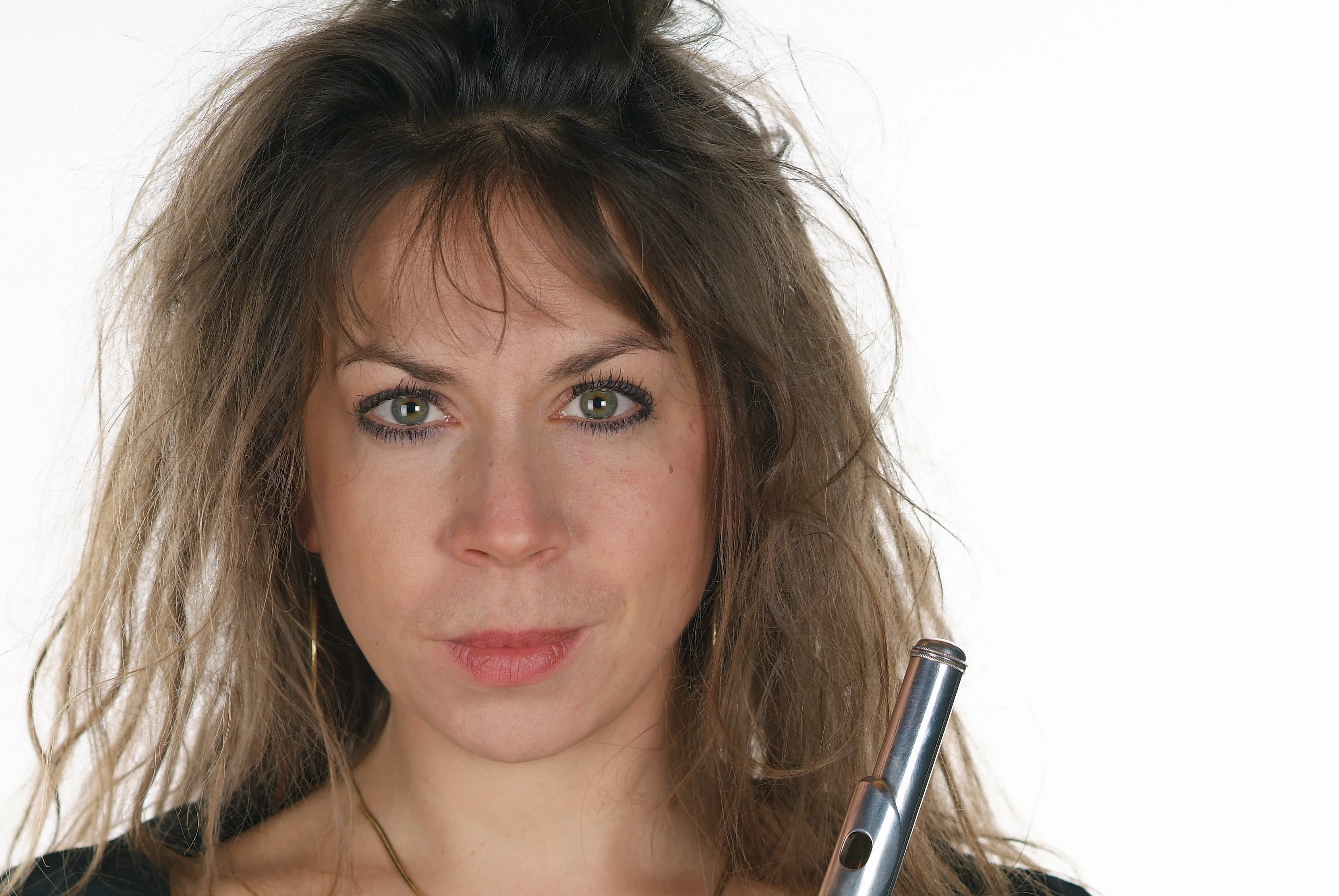
Image from Wikipedia
Image from Wikipedia
Wally Hase – The German Flute Artist Between Solo Stage, Chamber Music, and International Teaching
A Shaping Voice of the Classical Flute
Wally Hase, born in 1969 in Freiburg im Breisgau, is one of the most distinguished German flutists of her generation. Her career combines early acquired stage experience, international orchestra practice, and a long-standing teaching position at renowned music colleges. Anyone who observes her artistic path recognizes a musician who understands the flute not only as a solo instrument but as a powerful voice in ensemble, concert, and chamber music. ([de.wikipedia.org](https://de.wikipedia.org/wiki/Wally_Hase))
Biographical Beginnings: Stuttgart, World Youth Orchestra, and International Influence
Wally Hase's journey led her in 1986 to the Hochschule für Musik in Stuttgart, where she studied with Karl Friedrich Mess and traveled to the USA with a scholarship to the World Youth Orchestra that same year. Later, she continued her education with Jean-Claude Gérard and Aurèle Nicolet, two names synonymous with stylistic excellence and interpretative precision in the flute scene. Early on, she gained international experiences: as a member of the Ludwigsburg Festival Orchestra, she toured China, Japan, and South America; in 1989, she performed in New Zealand; in 1990, she received a scholarship from the Richard Wagner Society in Bayreuth. ([de.wikipedia.org](https://de.wikipedia.org/wiki/Wally_Hase))
This early phase shaped not only her technique and repertoire but also a pronounced musical self-understanding. From the outset, Hase navigated an environment that valued orchestral playing, solo culture, and chamber music equally. This provided her with the confidence that would characterize her later music career: a blend of tonal elegance, stylistic versatility, and the ability to organically fit into very different ensembles. ([de.wikipedia.org](https://de.wikipedia.org/wiki/Wally_Hase))
The Breakthrough as Solo Flutist in Weimar
The real career boost came remarkably early: even before finishing her studies, Wally Hase was appointed solo flutist of the Staatskapelle Weimar at the age of 22, a position she held until 2009. This role marked the transition from a promising newcomer artist to an established orchestral personality. Her simultaneous collaboration with major orchestras and conductors highlighted the immense resilience and trust-inspiring quality of her playing. ([de.wikipedia.org](https://de.wikipedia.org/wiki/Wally_Hase))
At the same time, her profile as a soloist became clearer. She performed with the Camerata Salzburg, the Dresden Philharmonic, the Folkwang Chamber Orchestra, and the Robert Schumann Philharmonie Chemnitz, developing a continuous presence in concert series and specialized formats. Since 2008, she has also maintained a regular collaboration with the Camerata Salzburg and works with the Cappella Andrea Barca under Sir András Schiff. This speaks to an artist whose musical development goes far beyond orchestra rehearsals, showcasing an unmistakable stage presence across various platforms. ([de.wikipedia.org](https://de.wikipedia.org/wiki/Wally_Hase))
Chamber Music as Artistic Home
Wally Hase is particularly rooted in chamber music. She performs in a duo with guitarist Thomas Müller-Pering, in the Trio Lobkowitz Wien, and with the Mandelring Quartet; she also developed the project "Music & Lyric" in collaboration with Jan Philipp Reemtsma. In these formats, her ability for differentiated sound shaping, chamber music balance, and sensitive musical communication is evident. The combination of flute and guitar, or flute, viola, and piano demands extremely precise timing and a keen sense for color and phrasing. ([de.wikipedia.org](https://de.wikipedia.org/wiki/Wally_Hase))
The diversity of her programs underscores this claim. Her discography features works by Bach, Telemann, Schubert, Grieg, Piazzolla, Ravel, Hindemith, Takemitsu, and Françaix. This selection illustrates an interpretative range from baroque transparency to modern sound language, pointing to a repertoire understanding that combines historical depth with contemporary openness. For music lovers, this is precisely what is appealing: a flutist who cannot be reduced to one style but deliberately opens musical spaces. ([de.wikipedia.org](https://de.wikipedia.org/wiki/Wally_Hase))
Teaching, Masterclasses, and International Authority
In 2000, Wally Hase was appointed professor of flute at the Hochschule für Musik Franz Liszt Weimar. From 2014 to 2018, she also held a guest professorship at the University of Music in Krakow, and since October 2018, she has been a professor of flute at the University for Music and Performing Arts in Vienna. These positions not only demonstrate institutional recognition but also her status as a formative pedagogue, whose experience impacts the next generation of flutists. ([de.wikipedia.org](https://de.wikipedia.org/wiki/Wally_Hase))
Additionally, she conducts masterclasses in Europe, Australia, Asia, and South America and serves on international juries. This complements the image of a musician who unfolds her expertise not only on stage but also in teaching and nurturing young talent. A crucial part of her authority lies here: Wally Hase is not merely an interpreter but a musician with didactic reach, international experience, and high professional weight. ([de.wikipedia.org](https://de.wikipedia.org/wiki/Wally_Hase))
Discography and Recordings: A Documented Sound Portrait
Wally Hase's discography documents her stylistic diversity in soloistic and chamber music contexts. Among the mentioned releases are "Weimarer Klassik 2" with the solo wind players of the Staatskapelle Weimar, "Tritonus Wimares" with Erwin Schulhoff's double concerto for flute and piano, "Festive Christmas Concerts" with Telemann, and "Concert in Weimar Castle" with Johann Christian Bach. These recordings showcase an artist who not only interprets the repertoire but also approaches it from a historically informed and sonically differentiated perspective. ([de.wikipedia.org](https://de.wikipedia.org/wiki/Wally_Hase))
Her discography in the chamber music realm is also noteworthy: "Lyric pieces" featuring works by Schubert and Grieg, "Romances" with Berlioz, "Jorinde und Joringel" as a classical audiobook for children, "Círculo Mágico" with Piazzolla, Ravel, Machado, Cordero, and Assad, as well as "You, Me and Sometimes Love" with selected love poems and music. These productions display not only repertoire consciousness but also a joy in dramaturgically conceived programs that connect music with literature, storytelling, and atmosphere. ([de.wikipedia.org](https://de.wikipedia.org/wiki/Wally_Hase))
Awards and Critical Reception
The music press has appreciated her work: in 2006, Wally Hase received the Prize of the German Record Critics, and in 2007, she won the Leopold Award. Such accolades are a strong signal in the field of classical music, as they recognize not merely popularity but also artistic quality, programmatic diligence, and recording performance. Her authority as an interpreter is further evident in the numerous radio and CD productions explicitly mentioned in the sources. ([de.wikipedia.org](https://de.wikipedia.org/wiki/Wally_Hase))
Critical recognition thus supports the profile of a musician who continually asserts herself in the tension between solo repertoire, orchestral work, and chamber music. Especially in a domain where tonal culture, breath control, and stylistic clarity are crucial, Wally Hase has built a robust artistic profile. Her career represents reliability at the highest level and a music career that does not rely on effects but on substance. ([de.wikipedia.org](https://de.wikipedia.org/wiki/Wally_Hase))
Current Activity and Artistic Presence
Even today, Wally Hase remains active and visible. Her official website announces upcoming dates with the Camerata Salzburg, the Trio Lobkowitz Wien, and other ensembles; it also notes new recordings available on her YouTube channel. Particularly, her collaboration with the Trio Lobkowitz Wien highlights how vibrant her chamber music work remains and how continually she expands her repertoire. ([wallyhase.de](https://www.wallyhase.de/))
The official website also points to ongoing concert practice with international programs and the close connection between live performances and documented recording work. This presents the image of an artist whose career is not limited to past achievements but continues to evolve in the here and now. For the perception as a modern flutist, this connection between presence, teaching, and repertoire maintenance is crucial. ([wallyhase.de](https://www.wallyhase.de/))
Musical Development and Cultural Influence
Wally Hase's artistic development can be read as a movement from orchestral discipline to an individually shaped solo voice. Her stations in Weimar, Salzburg, Krakow, and Vienna reflect a career rooted in the great institutions of European classicism while remaining open to chamber music, radio production, and pedagogical work. Thus, she possesses cultural reach far beyond the concert hall. ([de.wikipedia.org](https://de.wikipedia.org/wiki/Wally_Hase))
Her understanding of instruments is also part of this attitude: she is listed as a Haynes Artist on her Wikipedia page and plays on a silver flute by Wm. S. Haynes from Boston. Such details are more than mere accessories in the classical field; they point to a precise sound aesthetic and the close connection between instrument, technique, and musical identity. Altogether, this creates the image of a flutist who preserves traditions while filling them with vibrant presence. ([de.wikipedia.org](https://de.wikipedia.org/wiki/Wally_Hase))
Conclusion: Why Wally Hase Remains Compelling
Wally Hase represents a rare combination of virtuosity, intellectual clarity, and institutional authority. Her career encompasses solo positions, international concerts, award-winning recordings, and teaching assignments at two of the most important music locations in the German-speaking world. Those who experience her live will hear not only flawless flute artistry but also a mature, style-conscious musical personality with a true profile. ([de.wikipedia.org](https://de.wikipedia.org/wiki/Wally_Hase))
It is precisely in this that her lasting fascination lies: Wally Hase embodies the classical flute as a living art form straddling tradition and present. Her concerts and chamber music projects offer access to musical finesse, tonal elegance, and interpretative experience at the highest level. A live experience with her promises exactly what great classical music is about: concentration, expression, and unforgettable presence. ([wallyhase.de](https://www.wallyhase.de/))
Official Channels of Wally Hase:
- Instagram: no official profile found
- Facebook: no official profile found
- YouTube: https://www.youtube.com/channel/UCdtWjMGbiEsgUr-NkwXPQMg
- Spotify: no official profile found
- TikTok: no official profile found